
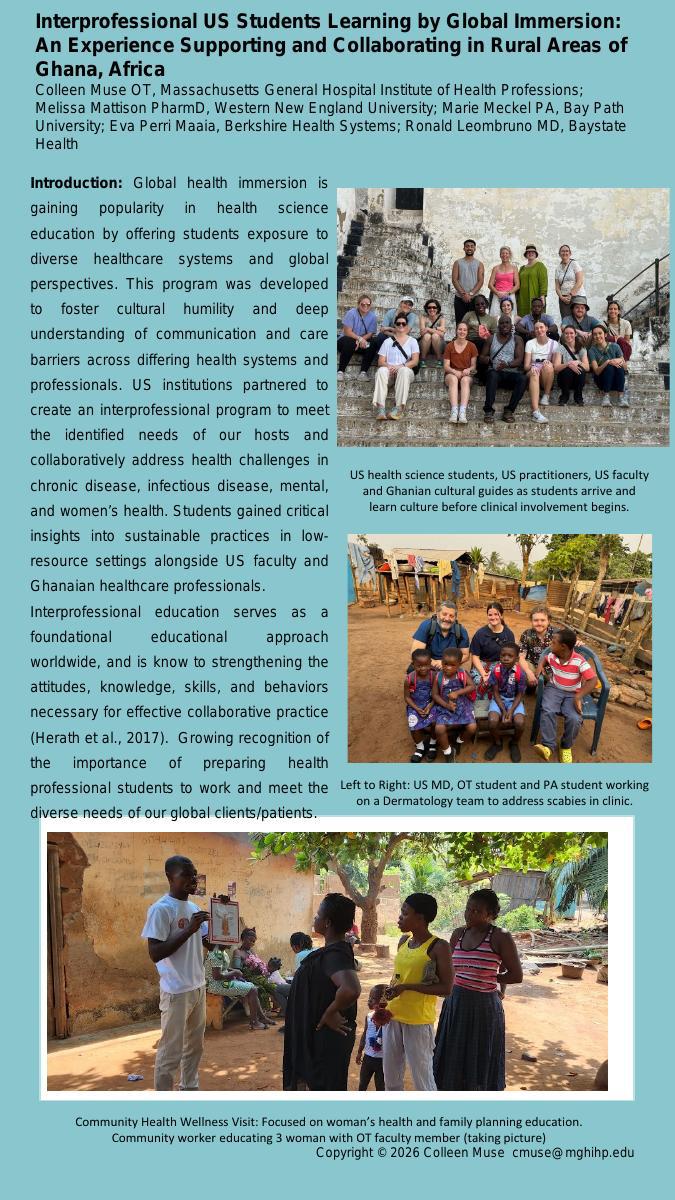
Introduction / Rationale: Global health immersion is gaining popularity in health science education by offering students exposure to diverse healthcare systems and global perspectives. This experience fosters cultural humility and deep understanding of communication and care barriers. US institutions partnered to create an interprofessional program to collaboratively address health challenges in chronic disease, infectious disease, mental, and women’s health. Students gained critical insights into sustainable practices in low-resource settings alongside US faculty and Ghanaian healthcare professionals.
Objectives: Understand interprofessional collaboration for sustainable global health impact.
Learn the importance of cultural humility.
Recognize global immersions impact for health science students.
Methods / Approach: US universities supported students preparing for a trip to rural Ghana. Preplanning included training on professional responsibilities, local culture, humility, known supports/challenges, and a health systems overview. In Ghana, students worked with local healthcare providers in multidisciplinary teams to create sustainable interventions through clinical visits, community screenings, and wellness support.
Results/Practice Implications: Six occupational therapy, four pharmacy, and one physician assistant student spent 10 days together in Ghana, enhancing cultural competence with oversight from five US healthcare practitioners. Students reported immersion increased awareness of how systems, supports, and culture impacted health. This model emphasized interprofessional education and the role of each team member to work together and provide holistic, client-centered care.
Conclusion / Contribution to the Occupational Therapy Profession: This experience reinforced the importance of cultural competence and interdisciplinary collaboration for sustainable impact and positive health outcomes. Students gained firsthand knowledge of impairments caused by various health conditions, highlighting the essential role of adaptable, person-centered care in rural settings.