
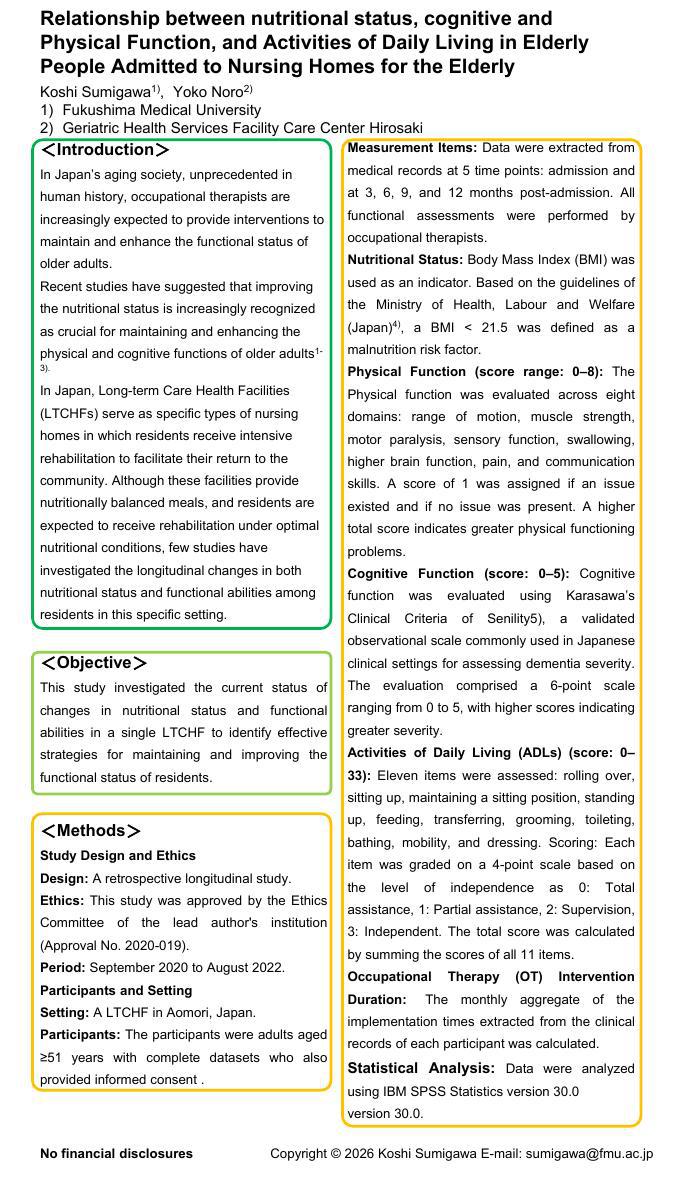
Introduction: In today's aging society, occupational therapists are expected to provide interventions that maintain and enhance the health of elderly individuals. This report presents a 12-month follow-up study examining the relationship between BMI, as an indicator of nutritional status, and physical and cognitive function, as well as activities of daily living (ADL), after admission to a facility.
Methods: This report was conducted retrospectively. The participants were 51 residents of a research-cooperating facility who consented to the study and had complete data. BMI, physical and cognitive function, and ADL were measured at five time points: admission and at 3, 6, 9, and 12 months after admission. A BMI of less than 21.5 was defined as the malnutrition risk group. Physical and cognitive functions, as well as ADL, were extracted from the evaluation forms used at the research-cooperating facility. The implementation time of occupational therapy was also aggregated between each survey point.
Results: Thirty-two individuals were in the malnutrition risk group at admission, which increased to 38 individuals at 12 months. The malnutrition risk group showed a significant decline in physical and cognitive function at 12 months compared with that at admission, but not in cognitive function or ADL. No effect of malnutrition risk at admission was observed on the implementation time of occupational therapy.
Conclusion: It was suggested that it is difficult for those at risk of malnutrition at admission to maintain and improve their physical and cognitive functions, even with the implementation of occupational therapy. It was suggested that it is necessary to focus on improving the nutritional status of those at risk of malnutrition at admission.