
Introduction: Adolescents, who make up 1.7 billion of the global population, are significantly affected by the challenges of screen exposure and digital behaviours. These problems often disrupt occupational balance and lead to problems that affect social and personal well-being.
Objective: This study aims to examine the effect of high school students' digital addiction levels on their occupational balance. Secondly, it aims to examine the effectiveness of the training provided by an expert that aimed to solve the problems caused by digital addiction.
Methods: This prospective cross-sectional study was conducted in two high schools in Turkey, one was a vocational technical high school and the other one was a normal high school. A total of 319 students aged between 13-19 participated in the study. The Digital Addiction Scale (DAS) and The Adolescent Occupational Balance Scale (A-OBS) were used. The training materials covered digitalcitizenship and digital health.
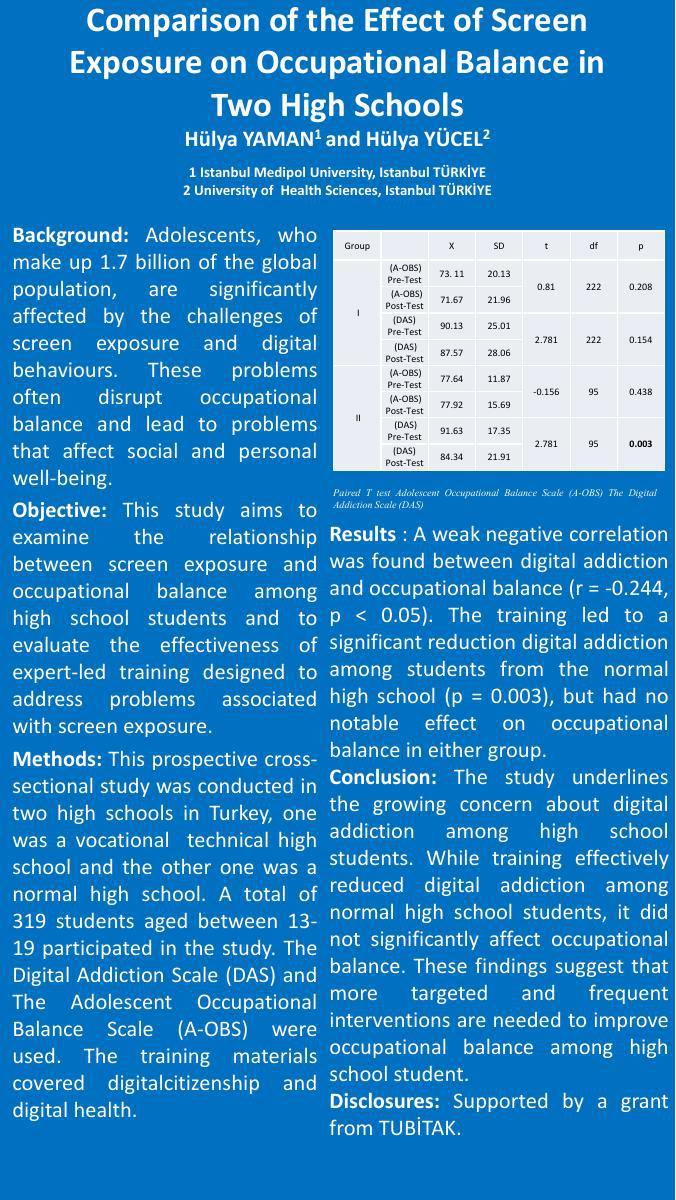
Results: A weak negative correlation was found between digital addiction and occupational balance (r = -0.244, p < 0.05). The training led to a significant reduction digital addiction among students from the normal high school (p = 0.003), but had no notable effect on occupational balance in either group.
Conclusion: The study underlines the growing concern about digital addiction among high school students. While training effectively reduced digital addiction among normal high school students, it did not significantly affect occupational balance. These findings suggest that more targeted and frequent interventions are needed to improve occupational balance among high school student.