
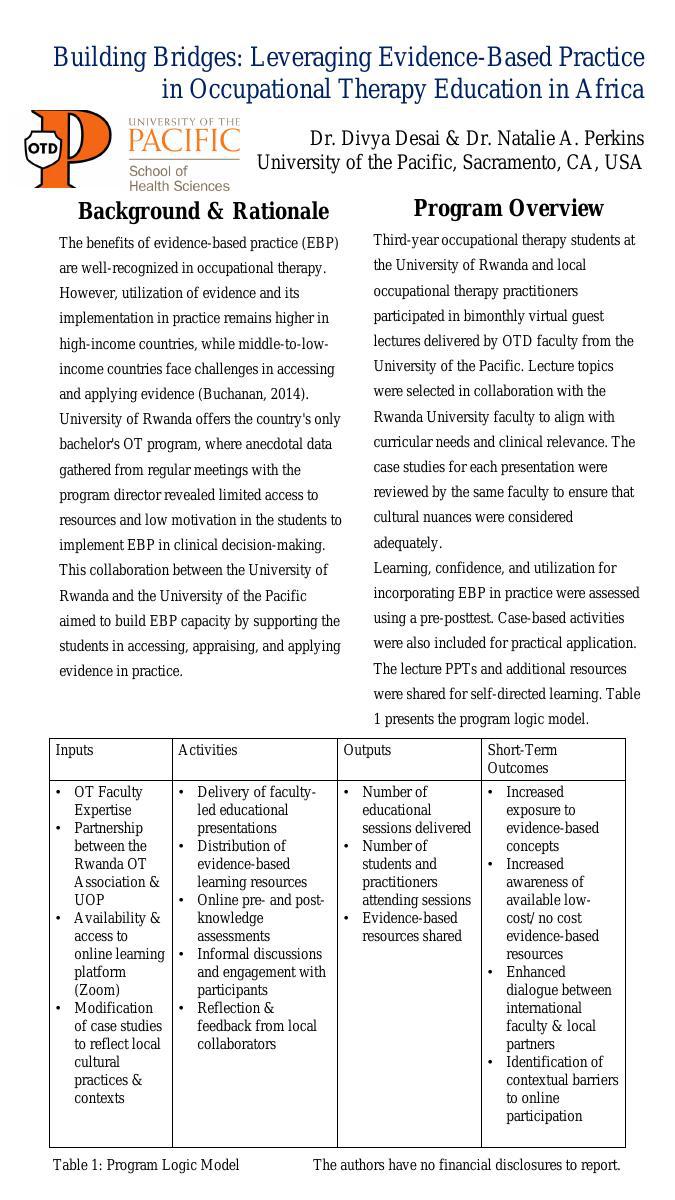
Introduction: The benefits of evidence-based practice (EBP) are well-recognized in occupational therapy. However, utilization remains higher in high-income countries, while middle-to-low-income countries face challenges in accessing and applying evidence (Buchanan, 2014). University A (in Africa) offers their country's only bachelor's OT program, where anecdotal data gathered from regular meetings with a lecturer at University A reveals limited access to resources and low motivation in the students to implement EBP in clinical decision-making. This collaboration between University A and University B (in the USA) aims to build EBP capacity by supporting the students in accessing, appraising, and applying evidence in practice.
Objectives:
- Measure the impact of collaboration with OTD faculty at University B on University A students' EBP skills
- Foster international collaboration between the University A & University B
Methods: Third-year OT students will attend bimonthly guest lectures on the topics selected by their instructor. Pre-post test of knowledge, knowledge, and utilization of EBP and satisfaction surveys will help evaluate direct learning from guest lectures, application of EBP through case studies, and explore further challenges and learning needs of the students.
Results: Pre- and post-surveys, and case studies will measure changes in students' confidence in accessing, appraising, and applying evidence. Satisfaction surveys will inform future topics in collaboration and additional learning needs
Contribution to the OT Profession: This collaboration seeks to enhance EBP skills among University A students, create resources for future practitioners to implement EBP, and open pathways for continued partnerships and doctoral capstone opportunities.