
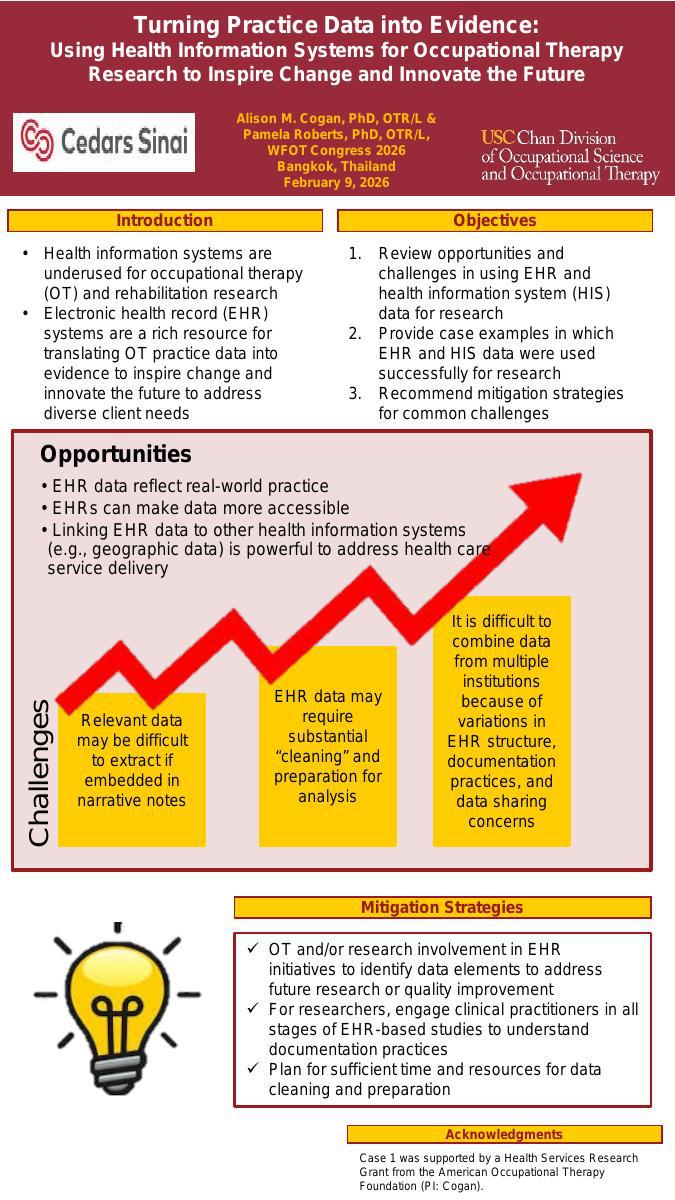
Introduction/Rationale: Health information systems are implemented worldwide, yet remain underused for occupational therapy (OT) and rehabilitation research. Electronic health record (EHR) systems are a rich resource for translating OT practice data into evidence that can inspire change and innovate futures to address diverse client needs.
Objectives: In this session, we will review opportunities and challenges in using health information system and EHR data for research to inform practice; provide case examples from rehabilitation in which EHR and other forms of electronic data was successfully used for research; and recommend mitigation strategies for challenges that are commonly encountered when using non-research data, tailored specifically for OT and rehabilitation research.
Methods/Approach: Three cases will be presented to illustrate opportunities, challenges, and implications of research that utilizes EHR and other health information data sources. Case 1 examines the association of self-care and mobility outcomes with the content and volume of therapy for adults with acquired brain injury; case 2 investigates the demographic and clinical characteristics of mild stroke survivors and their association with discharge location using EHR data and the Social Vulnerability Index; and case 3 addresses occupational therapy’s value in provision of quality care to prevent readmissions in order to keep people out of the hospital and participating in their lives.
Results/Practice Implications: EHR data that is generated through clinical practice can inspire change and inform sustainable improvements in OT services at local, national, and international levels.
Conclusion/Significance to OT Profession: Translating practice data into knowledge builds research capacity and expands the availability of robust evidence for rehabilitation practice including how we operate and grow.