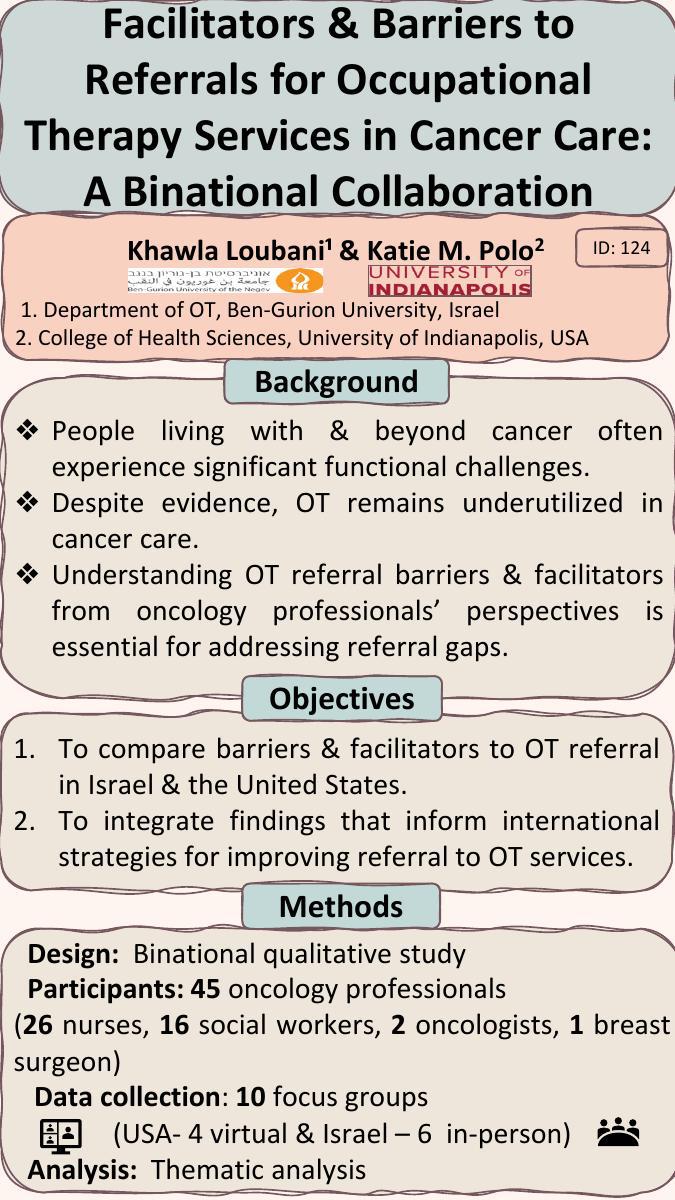
Introduction: People living with and beyond cancer (PLWBC) often face significant functional challenges, yet occupational therapy (OT) services remain underutilized in cancer care. Understanding barriers and facilitators to OT referrals from oncology professionals' perspectives is crucial for addressing referral gaps and meeting PLWBC’s unmet needs.
Objectives: This study explored oncology professionals' perspectives on OT’s role, identified barriers to OT referrals, and proposed solutions to improve referral practices across the United States and Israel.
Methods: This binational qualitative study utilized focus groups to gather insights from oncology professionals. Data were collected through focus groups. The data were thematically analyzed to identify barriers, facilitators, and actionable solutions for optimizing OT referrals.
Results: 45 oncology professionals participated (26 nurses, 16 social workers, two oncologists, one breast surgeon) aged (49.28 + 10.22) Ten focus groups were conducted (four virtual groups in the USA and in-person in Israel). Thematic analysis revealed barriers such as a lack of knowledge about OT’s role, limited awareness of cancer-related functional challenges, and systemic limitations. Facilitators included effective communication and increasing awareness of OT services. Participants recommended enhanced interdisciplinary collaboration, OT integration in diverse healthcare settings, and targeted marketing to clarify OT’s role. These findings suggest strategies for OT practitioners to address referral gaps and improve access to services for PLWBC.
Conclusion / Contribution to the occupational therapy profession: This study provides global insights into barriers and facilitators affecting OT referrals in cancer care. By collaborating with oncology professionals and integrating into cancer clinics within both hospital and community settings, OTs can help implement tailored strategies that enhance service accessibility to ensure that PLWBC receive necessary OT interventions.
