
Background
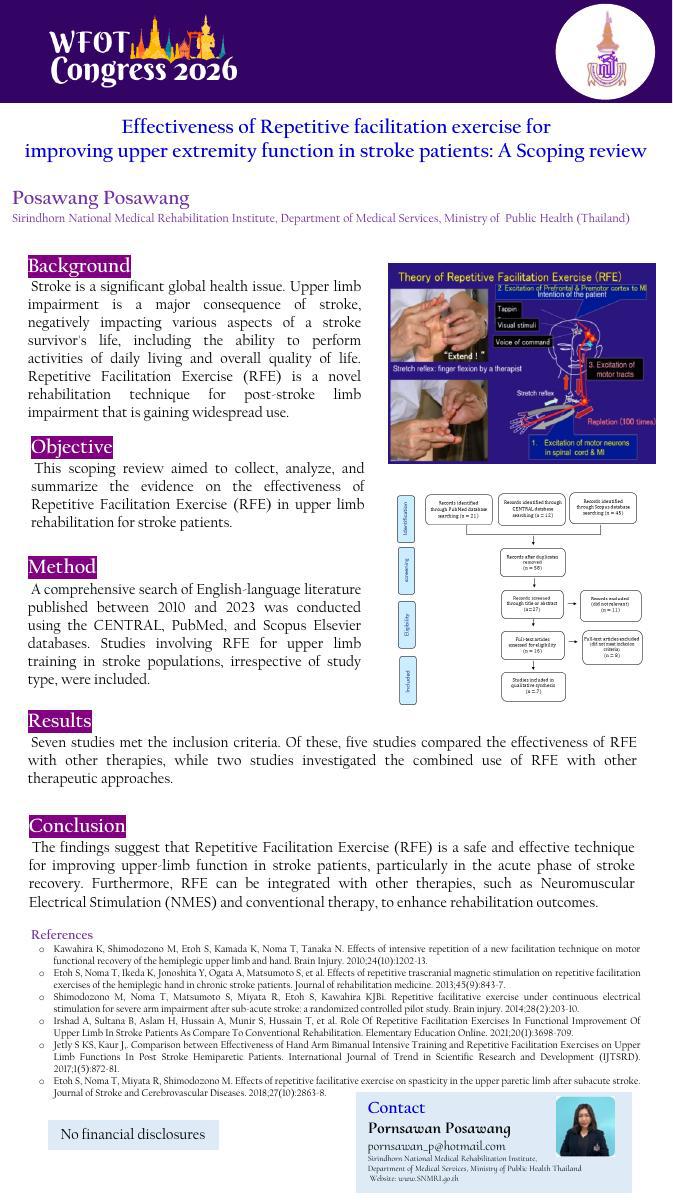
Stroke is a significant global health issue. Upper limb impairment is a major consequence of stroke, negatively impacting various aspects of a stroke survivor's life, including the ability to perform activities of daily living and overall quality of life. Repetitive Facilitation Exercise (RFE) is a novel rehabilitation technique for post-stroke limb impairment that is gaining widespread use.
Objective
This scoping review aimed to collect, analyze, and summarize the evidence on the effectiveness of Repetitive Facilitation Exercise (RFE) in upper limb rehabilitation for stroke patients.
Method
A comprehensive search of English-language literature published between 2010 and 2023 was conducted using the CENTRAL, PubMed, and Scopus Elsevier databases. Studies involving RFE for upper limb training in stroke populations, irrespective of study type, were included.
Results
Seven studies met the inclusion criteria. Of these, five studies compared the effectiveness of RFE with other therapies, while two studies investigated the combined use of RFE with other therapeutic approaches.
Conclusion
The findings suggest that Repetitive Facilitation Exercise (RFE) is a safe and effective technique for improving upper-limb function in stroke patients, particularly in the acute phase of stroke recovery. Furthermore, RFE can be integrated with other therapies, such as Neuromuscular Electrical Stimulation (NMES) and conventional therapy, to enhance rehabilitation outcomes.