
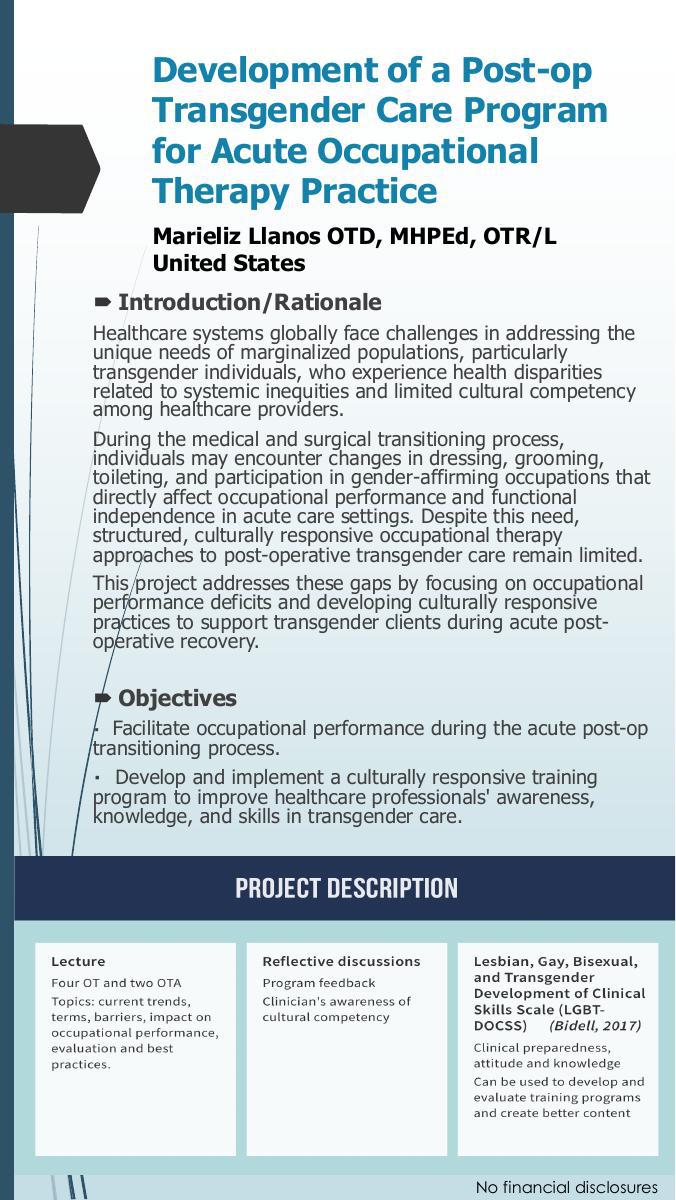
Introduction / Rationale: Healthcare systems globally face challenges in addressing the unique needs of marginalized populations, particularly transgender individuals. These populations experience health disparities stemming from systemic inequities and limited cultural competency among healthcare providers. This project seeks to inspire change by addressing occupational performance deficits in transgender clients, innovating culturally responsive practices for acute care settings.
Objectives:
Facilitate occupational performance during the acute post-op transitioning process.
Develop and implement a culturally responsive training program to improve healthcare professionals' awareness, knowledge, and skills in transgender care.
Methods / Approach: This project combined evidence-based approaches with innovative training methods, including lectures, reflective discussions, and the Lesbian, Gay, Bisexual, and Transgender Development of Clinical Skills Scale (LGBT-DOCSS) to assess clinicians’ cultural competency. Occupational therapy interventions focused on activities of daily living (ADLs), discharge planning, and adaptive task modifications for post-surgical transgender clients.
Results / Practice Implications: The program resulted in improved clinician preparedness, attitudinal awareness, and cultural competency, empowering occupational therapists to address systemic barriers in transgender care. Participants demonstrated enhanced confidence in delivering inclusive care and identified opportunities to collaborate with community resources for sustainable practice.
Conclusion / Contribution to the Occupational Therapy Profession: This project underscores the importance of cultural competence and collaborative care in supporting the transgender population. It contributes to occupational therapy by addressing a critical gap in literature and practice, fostering inclusivity, and promoting advocacy for occupational justice.