
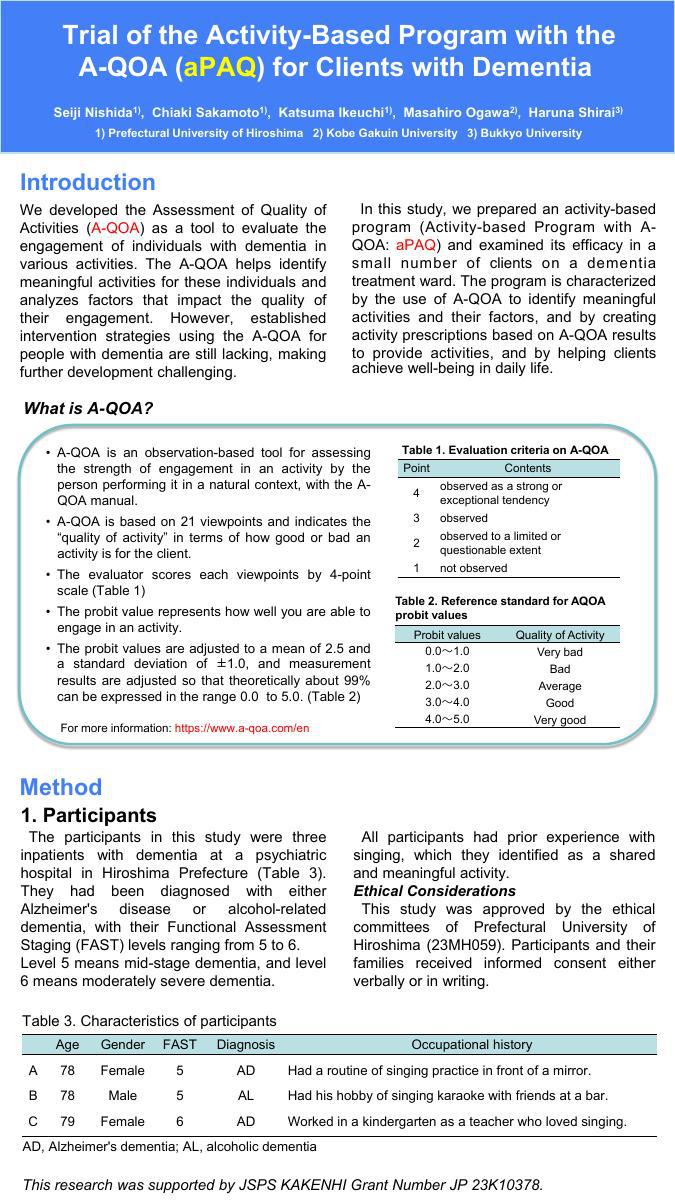
Introduction: We developed the Assessment of Quality of Activities (A-QOA), an observational assessment tool to assess impacts of engaging in particular activities from 21 viewpoints. To date, A-QOA-informed intervention strategies for inpatients with dementia have not yet been developed. Therefore, we created an activity-based program with the A-QOA (aPAQ) for clients with dementia.
Objectives: This study was performed to investigate the effects of aPAQ implementation. One characteristic of the aPAQ is the creation of individual activity prescriptions based on A-QOA results.
Methods: Three inpatients with dementia (mean 78.3 yo) at a psychiatric hospital participated in this study. Their FAST scores ranged from 5 to 6. Music appreciation was identified as a common meaningful activity and was offered based on individual activity prescriptions in the dayroom from 4–5 pm, when the patients regularly became agitated. The program was implemented in ten sessions (1-2: evaluation, 3-9: intervention, 10: re-evaluation) from January to March 2024 by an occupational therapist and an assistant. Informed consent was obtained orally and through documents from the participants and their families.
Results: Mean NPI-NH score decreased from 37.7 to 17.0, with amelioration observed in delusions, agitation, and anxiety. Mean DEMQOL-Proxy score increased from 86.7 to 108.3, and mean A-QOA score increased from 1.3 to 3.0, but N-ADL score did not change.
Conclusions: The aPAQ may exert beneficial effects on BPSD, QOL, and activity engagement among inpatients with dementia who regularly experience agitation. Further experimental research is needed to clarify effects of the aPAQ.