
Study Design: Case report
Introduction / Rationale: A Triangular Fibrocartilage Complex (TFCC) injury refers to damage to the triangular fibrocartilage structure in the wrist, affecting its stability and function. For a chef who requires precision and strength in their work, a TFCC injury can present significant challenges. In the vocational rehabilitation process for workers, the ICF method helps occupational therapists conduct a thorough assessment of the worker’s functional and health status, guiding the rehabilitation plan.
Objectives: This study emphasizes the role of occupational therapists in vocational rehabilitation, using the ICF framework to understand physical and mental functioning, as well as job environment demands. For patients with musculoskeletal impairments due to occupational injuries, therapists provide functional assessments, return-to-work plans, and job redesign. This study documents the physiological improvements of two chefs diagnosed with TFCC during rehabilitation and their return-to-work journey.
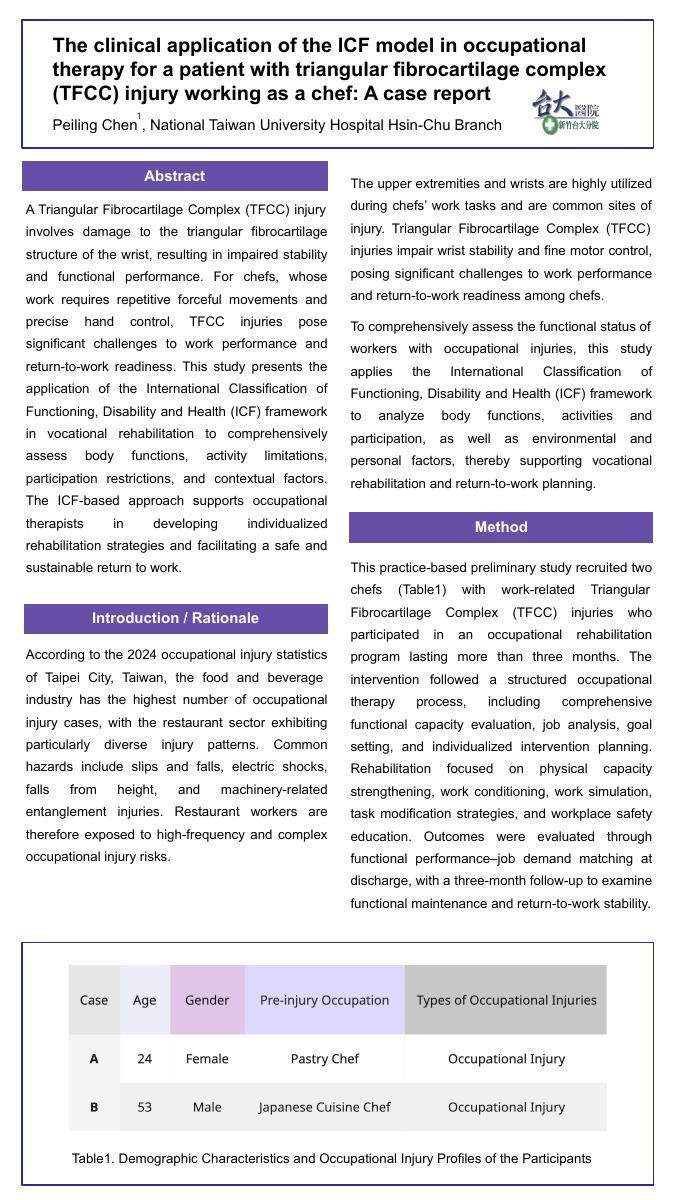
Methods / Approach: Two chefs who were injured at work participated in more than three months of vocational rehabilitation services. The assessment included an evaluation of work-related injury rehabilitation needs and a functional capacity evaluation. Treatment involved a program to enhance physical work capacity, work suitability training, job simulation training, job redesign, and referral to psychological resources. Outcome measures included employment stability.
Results / Practice Implications: Both patients successfully returned to work or secured reemployment after completing rehabilitation.
Conclusion / Contribution to the occupational therapy profession: This case report demonstrates how the ICF framework supports comprehensive assessments and treatments. Future research should be conducted to identify better methods for applying the ICF approach in vocational rehabilitation services.