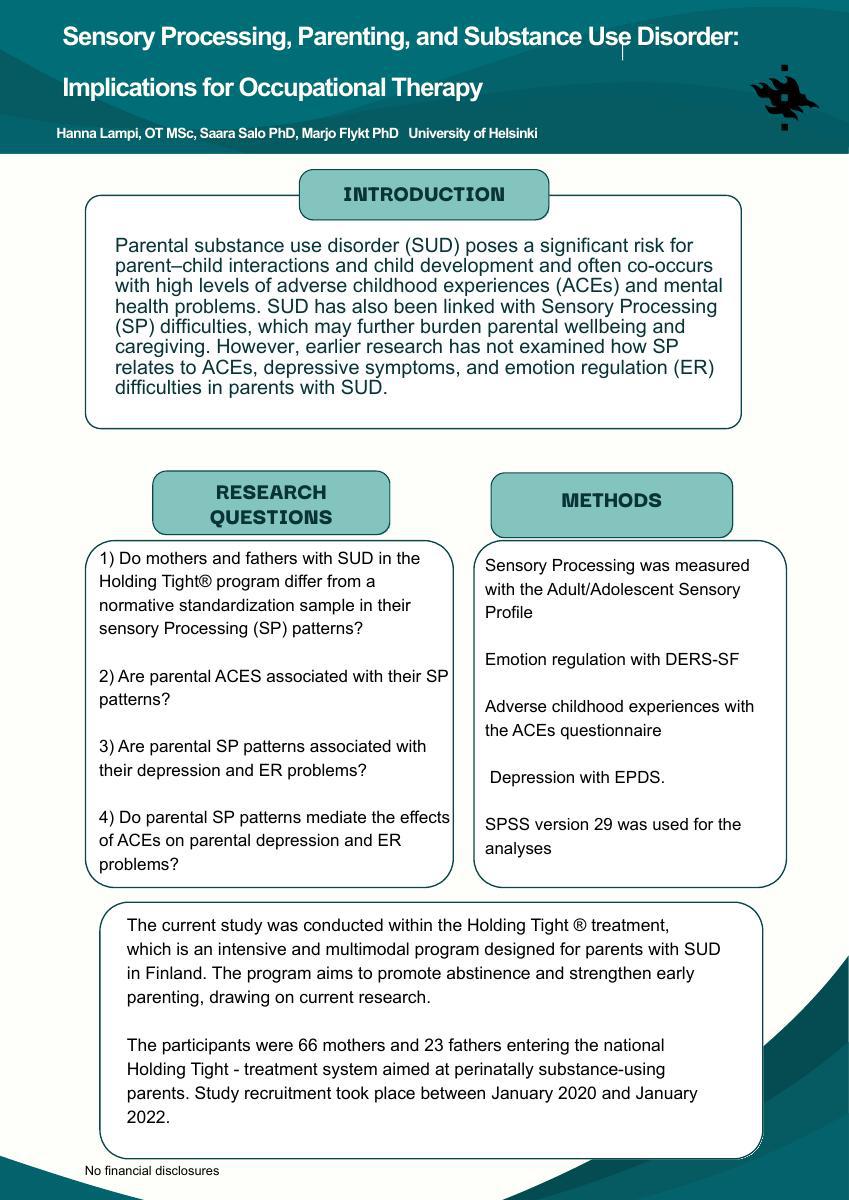
Introduction / Rationale: Parental substance use during pregnancy is linked to fetal growth issues, prematurity, and long-term developmental challenges, including difficulties in self-regulation and increased risk of substance use later in life. Globally, 6% of pregnant women use addictive substances (Arponen, 2019). Sensory Processing (SP) influences behavior and emotion regulation, yet little is known about its role in parenting, particularly among parents with Substance Use Disorder (SUD).
Objectives: This study examines (1) the associations between SP, adverse childhood experiences (ACEs), emotion regulation, and depressive symptoms in parents with SUD, (2) the relationship between parental and child SP, and (3) how SP affects the effectiveness of parenting interventions.
Methods / Approach: The study is part of a broader project at the University of Helsinki, involving 66 mothers, 23 fathers, and 72 children from the national Holding Tight® treatment network. Data on SP, ACEs, and mental health factors were collected and analyzed.
Results / Practice Implications: Preliminary findings suggest that SP challenges are prevalent among parents with SUD and their children, contributing to parenting difficulties. Addressing SP in treatment may enhance intervention outcomes.
Conclusion / Contribution to Occupational Therapy: Understanding SP in SUD-affected families can inform tailored occupational therapy interventions, improving parent-child interactions and long-term family well-being.