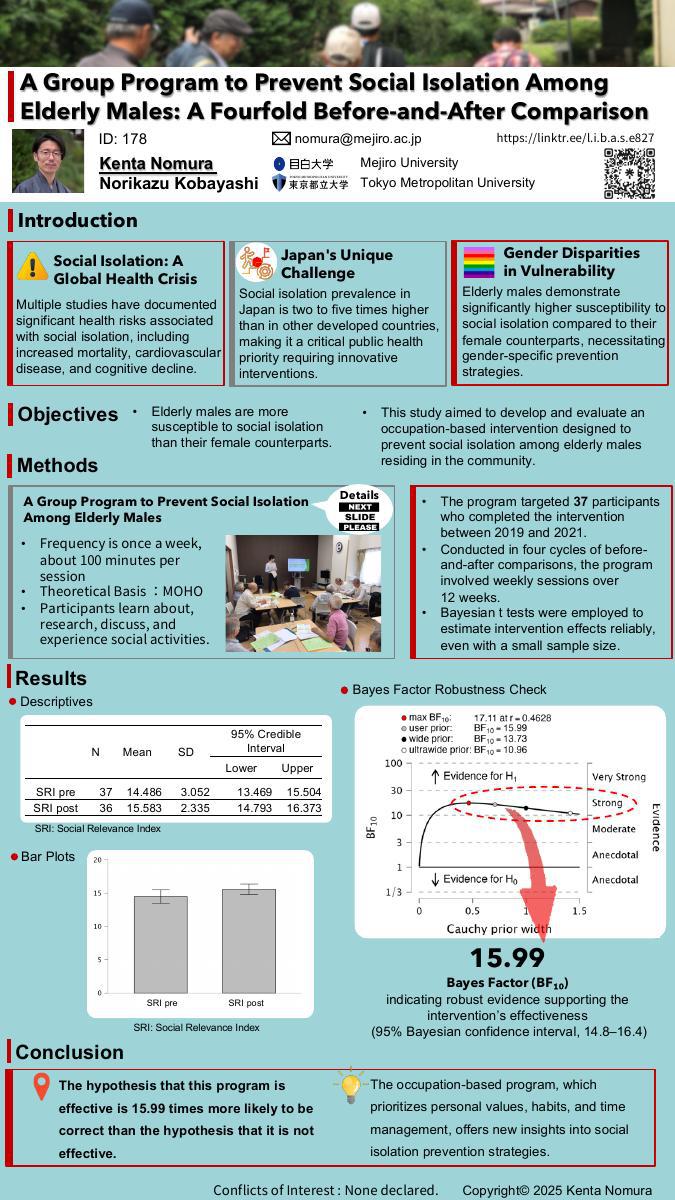
Introduction: Several studies have documented the health risks associated with social isolation, which is a pressing concern in Japan, where its prevalence is two to five times higher than in other countries. Consequently, Japan’s initiatives to combat social isolation could serve as a global benchmark.
Objectives: Elderly males are more susceptible to social isolation than their female counterparts. This study aimed to develop and evaluate an occupation-based intervention designed to prevent social isolation among elderly males residing in the community.
Methods: The program targeted 36 participants who completed the intervention between 2019 and 2021. Conducted in four cycles of before-and-after comparisons, the program involved weekly sessions over 12 weeks. Due to COVID-19 restrictions, the number of participants was limited. Bayesian t tests were employed to estimate intervention effects reliably, even with a small sample size.
Results: Participants acquired strategies for engaging in social activities through collaboration with a multidisciplinary team, guided by self-assessments grounded in the Human Work Model. The social relevance index yielded a Bayes factor (BF10) of 15.99 (95% Bayesian confidence interval, 14.8–16.4), indicating robust evidence supporting the intervention’s effectiveness.
Conclusion: This study represents the first occupational therapy intervention in Japan to emphasize gender-specific strategies for addressing social isolation. The occupation-based program, which prioritizes personal values, habits, and time management, offers new insights into social isolation prevention strategies.
