
Introduction: The aging of family caregivers and challenges of long-distance caregiving, due to the rise in elderly individuals living alone, have raised concerns about dementia care in Japan. Changes in family dynamics from declining birth rates and longer life expectancy emphasize the need to adapt support strategies for family caregivers. However, no comprehensive scale specifically measures dementia caregiving competence, including burden, affirmation, and coping.
Objectives: This study aimed to develop and validate the Caregiving Competence Scale for Dementia (CCSD) for primary family caregivers of individuals with dementia.
Methods: Primary family caregivers of individuals with cognitive impairment and varying dementia severity participated in this study. The initial CCSD was developed, and a questionnaire survey was conducted to assess its structural validity and reliability. Data from 150 participants were analyzed using exploratory and confirmatory factor analyses.
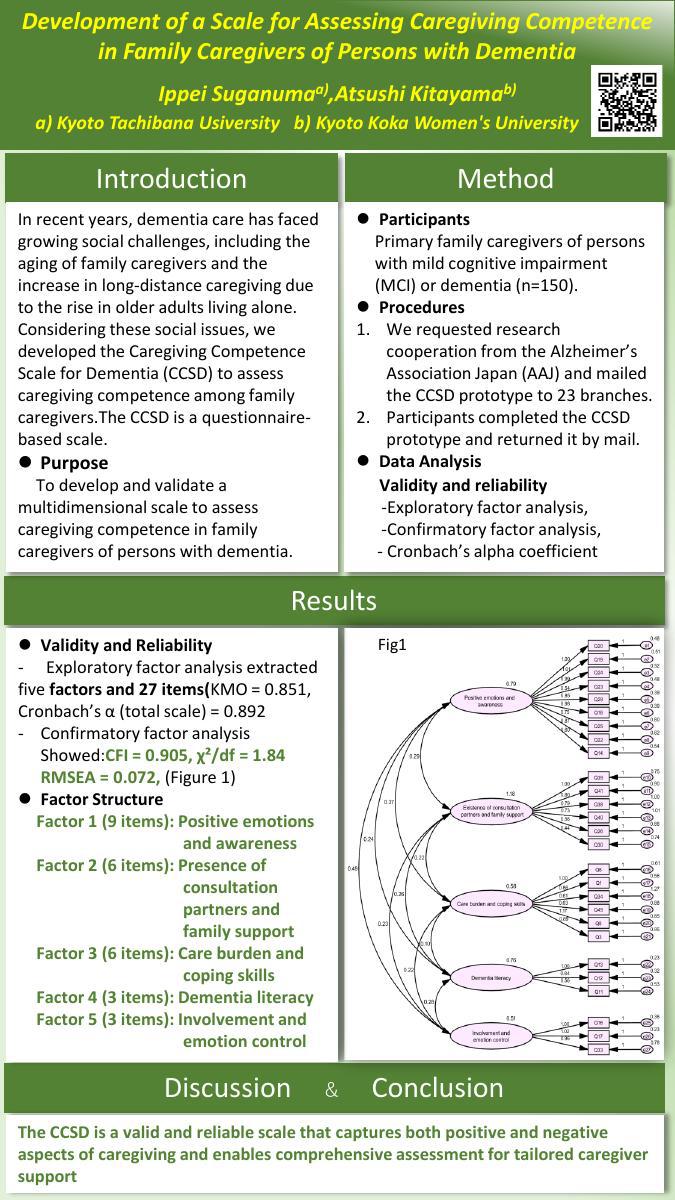
Results: Exploratory factor analysis identified five factors with 27 items: positive emotions and awareness, consultation and family support, caregiving burden and coping skills, dementia literacy, and emotional control. Confirmatory factor analysis showed good model fit (CFI = 0.905; RMSEA = 0.072), and the overall Cronbach’s alpha was 0.892.
Conclusion: The CCSD, with 27 items across five factors, was developed as a valid and reliable tool for assessing caregiving competence. Measuring this competence supports targeted support strategies and effective interventions for family caregivers. As occupational therapists, it is essential to support not only individuals with dementia but also their family caregivers to improve overall care quality.