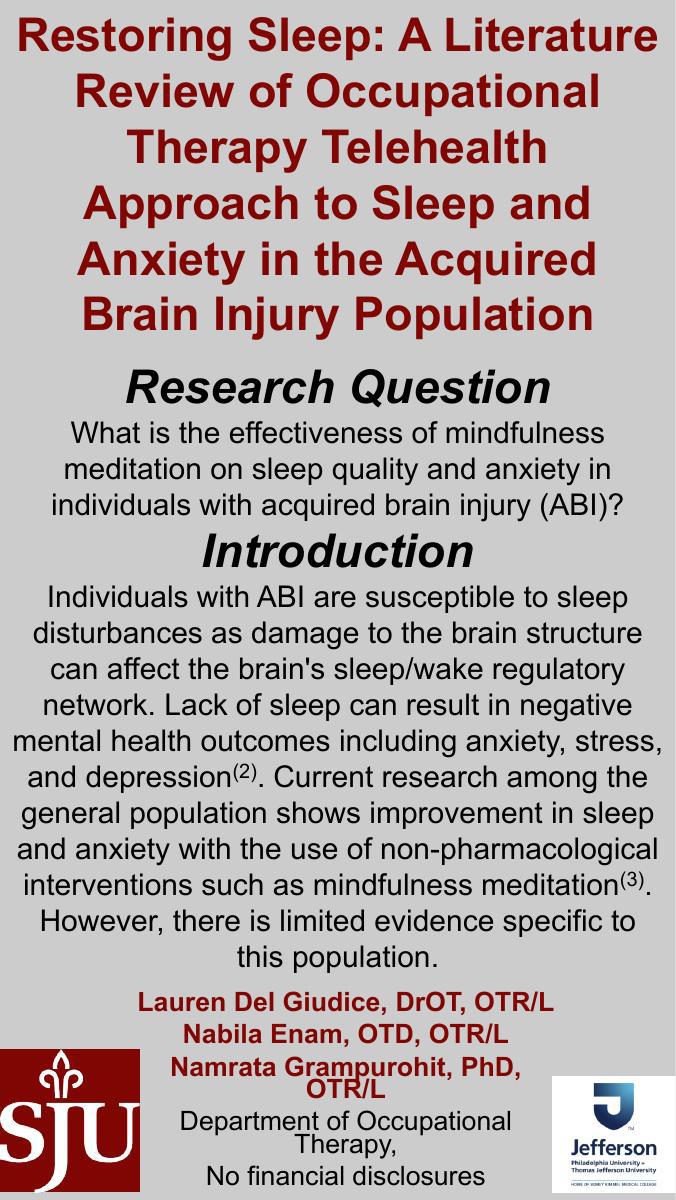
Introduction / Rationale: Sleep is regarded as the fifth pillar of health, and quality sleep is essential for overall well-being. Individuals with acquired brain injuries (ABI) are susceptible to poor sleep quality due to neurological impairment. Occupational therapy practitioners (OTPs) often overlook sleep in their practice.
Objectives: To understand occupational therapy practitioners’ role and capacity to address sleep in ABI population
Methods / Approach: A review of literature on ABI, non-pharmacological interventions, occupational therapy, and related healthcare profession, was conducted using several databases: CINAHL, PubMed, Google Scholar, and the AJOT. Evidence from 35 published sources over the past 15 years was synthesized into four themes.
Results / Practice Implications: Four main themes were identified: the impact of ABI on sleep quality, the influence of anxiety, non-pharmacological interventions for sleep and anxiety, and the role of occupational therapy in telehealth and complementary medicine. Sleep disturbances can negatively affect mood and engagement in daily activities. Although there is evidence supporting the effectiveness of non-pharmacological interventions for improving sleep, there is a limited amount of literature in occupational therapy specifically addressing sleep issues in the ABI population.
Conclusion / Contribution to the occupational therapy profession: OTPs are capable of addressing sleep using non-pharmacological interventions. However, OTPs are not assessing or treating sleep in the ABI population. There is limited literature regarding the use of sleep interventions in ABI. OTPs need to address all aspects of well-being, including sleep. A study focusing on the effect of telehealth mindfulness meditation on sleep and anxiety could bridge the gap in the literature and inspire change in OT practice.
