
Introduction: Motor impairment is a common post-stroke deficit. Occupational therapy (OT) combines repetitive and intensive exercises to improve limb movement and function. With the increasing use of robotic devices in therapy, it is essential to research their treatment characteristics, especially for patients with severe to moderate impairment in upper limb, who have difficulty producing active movement.
Objective: To Analyze and compare treatment characteristics, patient and therapist satisfaction between Robot Assisted Therapy (RAT) and Conventional OT (COT).
Method: Cross-sectional intra-subject study with 3 occupational therapists and 30 sub-acute post stroke patients with severe-moderate upper limb impairment (24 men, 6 women, age 43-83). Each participant received one RAT session and one COT session, in a cross-over design. Data on repetitions, limb motion duration, types and amounts of compensations were collected. Pain was assessed using the Visual Analogue Scale before, during, and after each session. Both patients and therapists completed satisfaction questionnaires post-session.
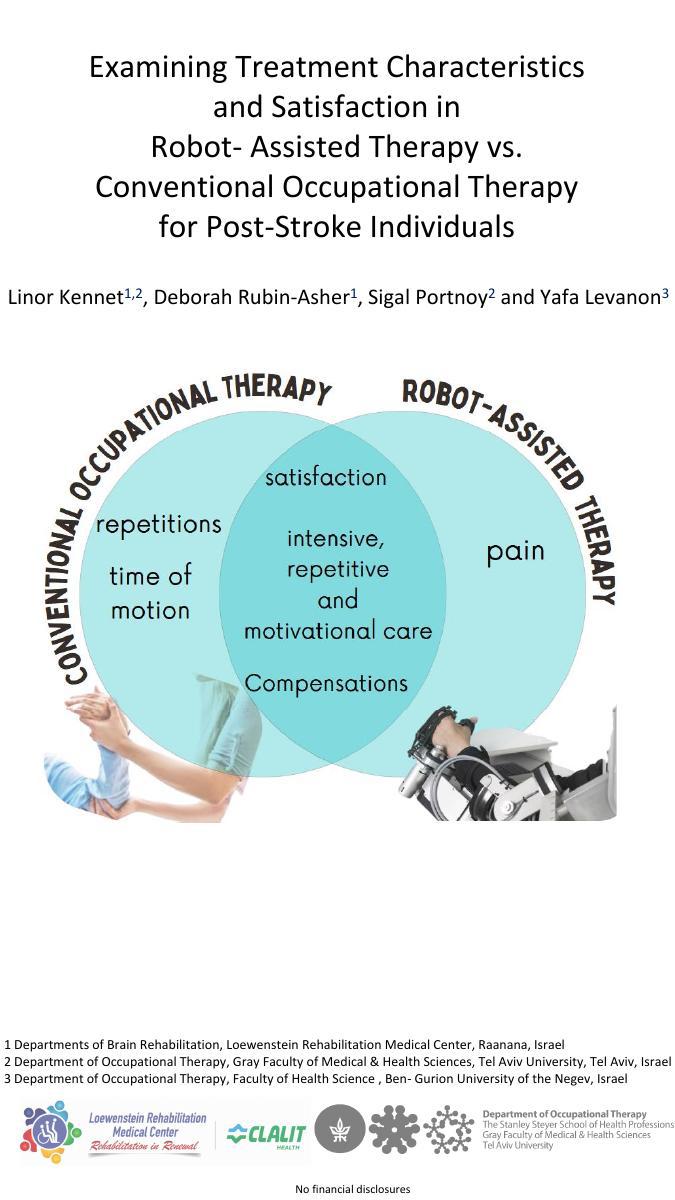
Results: The RAT had significantly fewer repetitions, a shorter time of upper limb motion and lower reports of pain. There were differences in the type of compensations but not the amount. Patient satisfaction was high in both treatments, with no significant difference. Therapists reported significantly higher satisfaction in RAT.
Conclusion: Both types of treatment are intensive, repetitive and motivational. Patients with upper limb pain who avoid movement might benefit from RAT. Incorporating occupational therapists in RAT might improve their satisfaction and thus improve service quality. Data on repetitions and compensations, can aid precise rehabilitation planning for optimal results.