
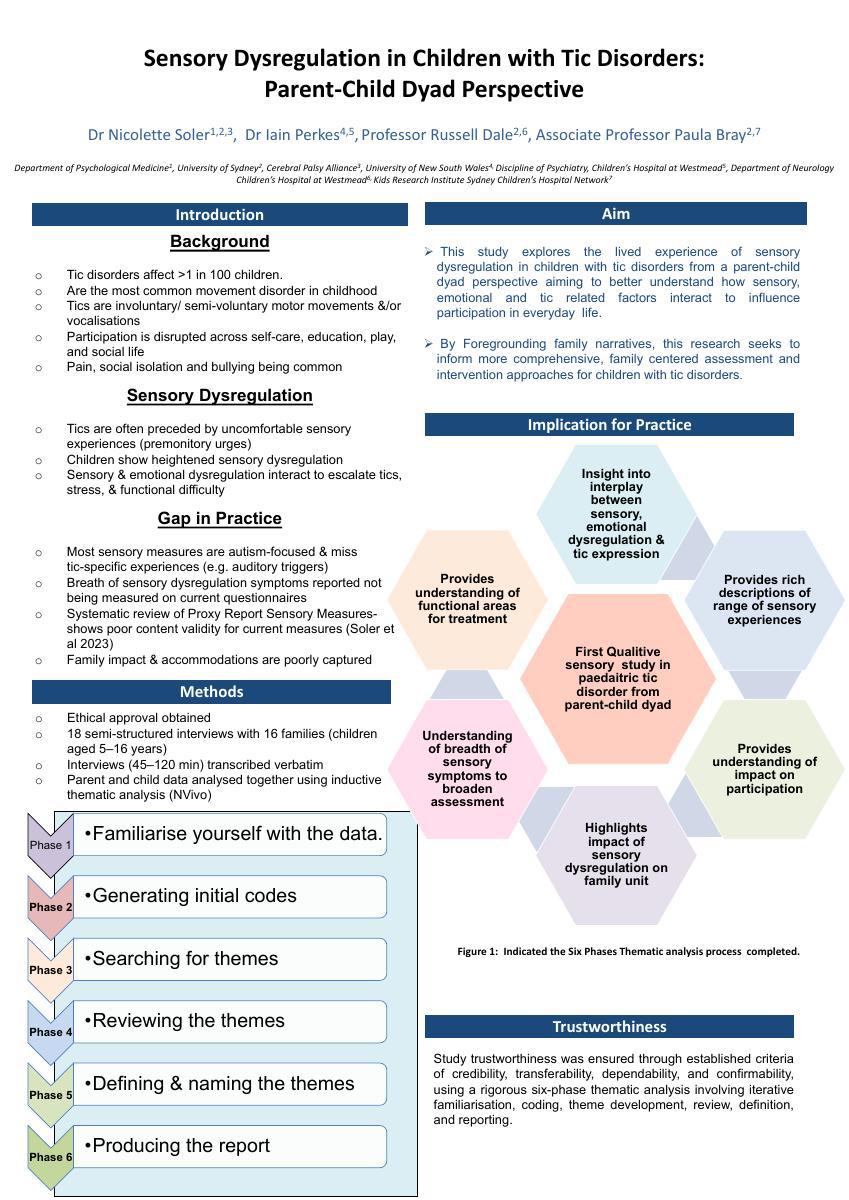
Introduction: Sensory dysregulation symptoms are pervasive in children with neurodevelopmental disorders. For comprehensive assessment, and to inform treatment, it’s essential to measure symptom type and severity and impact on daily function. Clinical and research experience anecdotally reports that patients’ sensory dysregulation symptoms are not captured on most sensory measures. Thus, the breadth and extent of dysfunction is not accurately recorded or addressed in clinical practice. To explore the lived experience of sensory dysregulation and impact on function, we sought patient experiences.
Objective: This qualitative study aimed to identify sensory symptoms and impacts on function children with tic disorders and co-morbidities were experiencing.
Approach: We conducted 18 semi-structured interviews with 16 children with tic disorders and / their parents. Interviews ranged between 45 min to 2 hours and were transcribed verbatim. Using thematic analysis, themes were identified and coded using NVIVO software. Data saturation was determined when no additional themes were identified, and member checking was conducted to confirm themes.
Results: Three main themes emerged: 1) we sacrifice and adapt to get daily activities done in the home; 2) my child’s experiences of the environment hinders their participation in the community; and 3) these sensory problems impact our child and family.
Conclusion: When assessing the impact of sensory dysregulation on the child’s function and participation, the impact and quality of life on the entire family unit and sensory sensitives beyond the scope of current assessment measures must be considered to comprehensive understand the breath of the challenges experienced.