
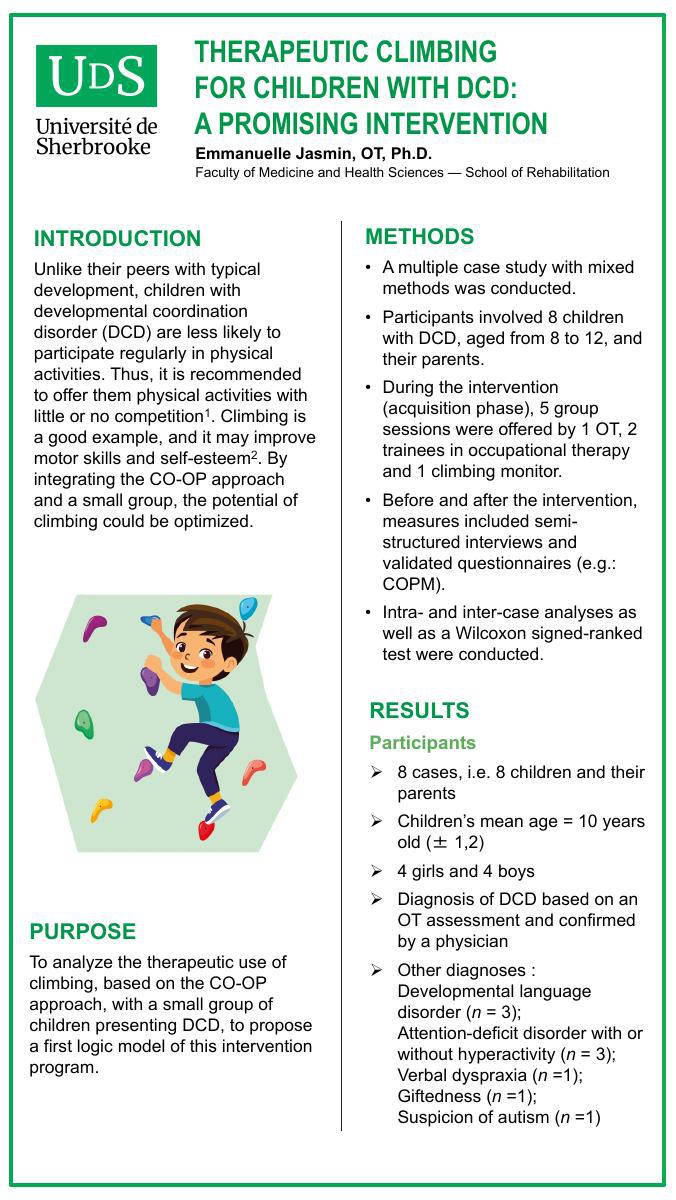
Introduction: Unlike their peers with typical development, children with developmental coordination disorder (DCD) are less likely to participate regularly in physical activities. Thus, it is recommended to propose them physical activities with few or no competition. Climbing is a good example, and it may improve significantly motor skills and self-esteem. By integrating the Cognitive orientation to daily occupational performance (CO-OP) approach, the potential of climbing could be optimized. Moreover, being at greater risk of rejection, small group interventions may help children with DCD to create positive relationships with peers.
Objective: This pilot study aimed to analyze the therapeutic use of climbing, based on the CO-OP approach, with a small group of children presenting DCD.
Methods: This project was operationalized using a multiple case study. Participants included eight children with DCD, aged from 8 to 12, and their parents. Data collection comprised semi-structured interviews and validated questionnaires, including the COMP. The intervention involved seven group sessions offered by an occupational therapist, two trainees in occupational therapy and a climbing monitor. Intra- and inter-case analyses as well as a Wilcoxon signed-ranked test were conducted.
Results: Clinically and statistically significant effects were found on performance and satisfaction goals. Benefits were also perceived on feeling of competence, intrinsic motivation, self-regulation and friendship. The intervention was greatly appreciated by children and parents.
Conclusion: This study provides a better understanding of the therapeutic use of climbing for a group of children with DCD, which may guide the implementation and/or the reassessment of this intervention.