
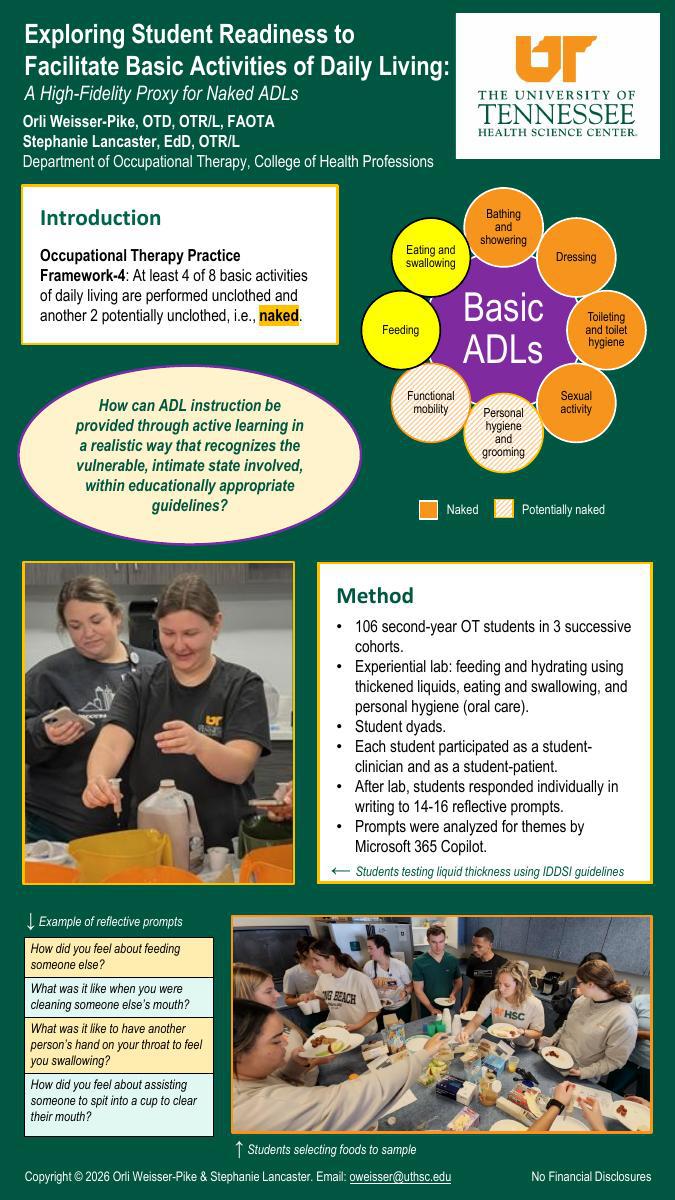
Introduction / Rationale: Second-year Master of Occupational Therapy (OT) students, nearing the end of their didactic curriculum, participated in an experiential lab following a series of lectures on feeding, swallowing, and oral care. Afterward, they reflected on their readiness to facilitate these basic activities of daily living with others through a series of guided prompts. We analyzed the responses of 68 students.
Objectives: To explore the perceptions, experiences, and self-reported learning outcomes of occupational therapy students who participated in the lab.
Methods / Approach: After the lab, students answered 14 prompts about their experiences. We analyzed the data by submitting responses to a large language module artificial intelligence processor to uncover main themes.
Results / Practice Implications: Reflections revealed strong themes on the importance of communication and empathy. Participants found the process of preparing thickened liquids unappealing and generally felt awkward about feeding another adult. Palpating someone’s throat while they swallowed was described as invasive and uncomfortable. Brushing someone else’s teeth was viewed as challenging with concerns about causing discomfort or gagging in another person.
Conclusion / Contribution to the occupational therapy profession: Even though students learn about interventions for basic activities of daily living, they often lack practice opportunities to develop interpersonal skills in intimate occupations, like assisting someone with feeding or oral care. This lab gave students a safe and effective opportunity, before clinical exposure, to explore their feelings about entering another’s personal space. This simple, straightforward lab experience is recommended for OT educators in their teaching as a model for self-discovery and capacity-building with an end goal of enhancing patient care in future OT practitioners.