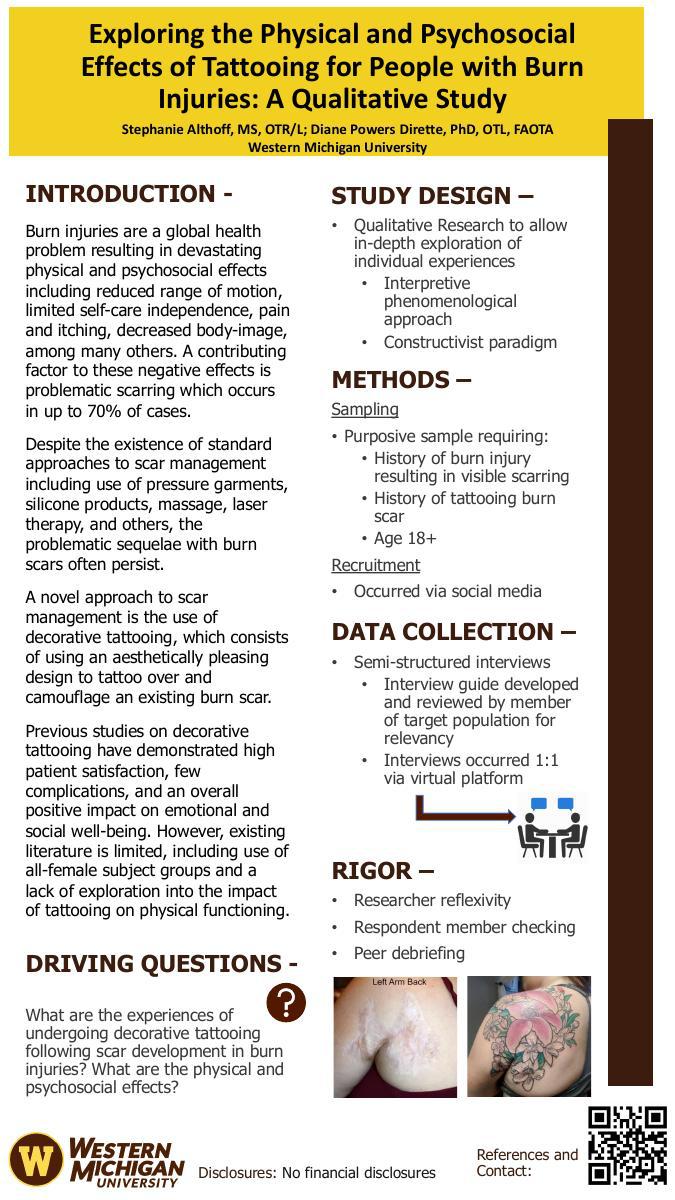
Introduction / Rationale: Burn scarring plays a role in physical functioning, such as the ability to move an affected joint or perform an everyday task, as well as psychosocial functioning, such as altered socialization and impaired body image. A novel approach to burn scar management is the use of decorative tattooing to divert attention away from disfiguring scars. Research in this area is limited necessitating further exploration.
Objectives: This study aimed to explore the experiences of individuals with burn injuries who underwent decorative burn scar tattooing.
Methods / Approach: An interpretive phenomenological approach guided this study. Three participants who had previously undergone tattooing of burn scars participated in semi-structured interviews. Thematic analysis was conducted to identify patterns and themes as they relate to the physical and psychosocial effects of burn scar tattooing.
Results / Practice Implications: Four main themes were identified: reasons for camouflaging scar, ups and downs of tattoo experience, positive psychosocial impact of tattooing burn scars, and varied physical effects of tattooing burn scars. Numerous sub-themes highlighted the benefits and challenges associated with burn scar tattooing. Results indicated potential psychosocial and physical benefits, including improved self-confidence, positive impact on clothing choices, reduction in pruritis (itching), and improved posture and motion.
Conclusion / Contribution to the occupational therapy profession: Study findings suggest that burn scar tattooing may offer both psychosocial and physical benefits, serving as a potential alternative approach to enhance holistic client well-being, address body image concerns, and support functional recovery for individuals with burn injury. This research underscores occupational therapy's commitment to client-centered care and informs practionitioners of the potential for innovative approaches to complement established rehabilitation practices in burn care.
