
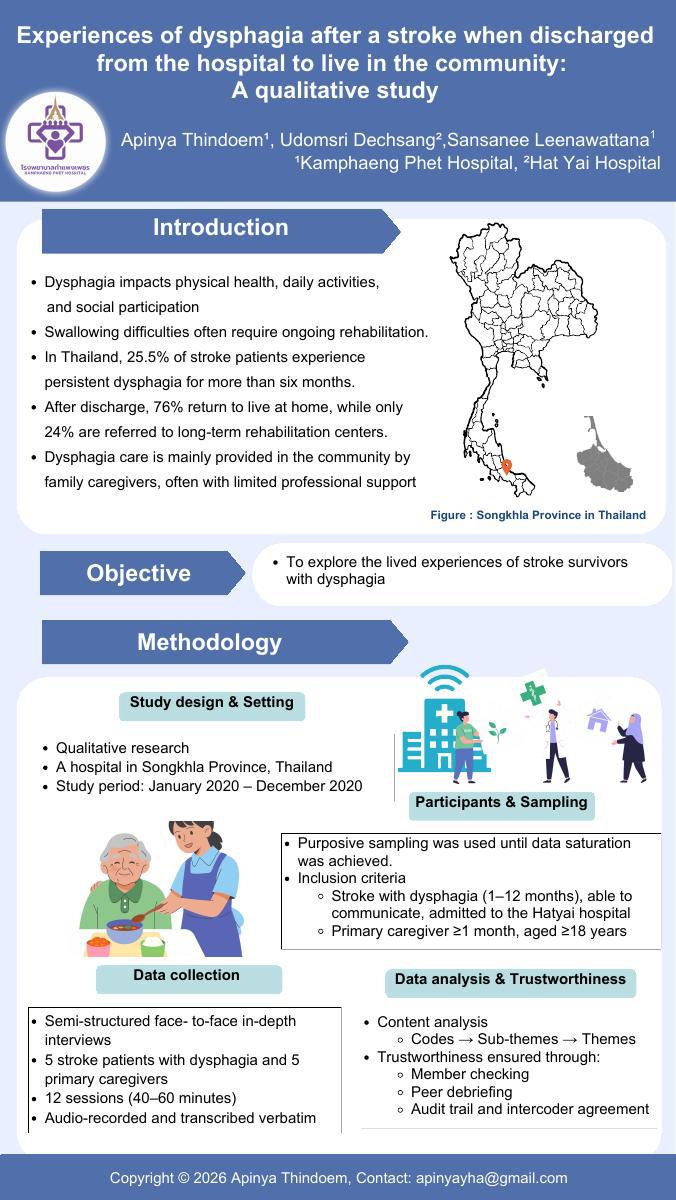
Introduction / Rationale: Dysphagia affects a patient's quality of life and activities of daily living. Patients with stroke-related dysphagia require immediate and ongoing therapy. After discharge back into the community, seventy percent of them continued feeding via nasogastric tubes and experienced further complications. Patients and caregivers lacked knowledge about their experiences, which differed from living in the hospital.
Objectives: This qualitative study aimed to explore the experiences of stroke patients who had dysphagia when they were back home.
Methods / Approach: The purposive sampling method was used to invite patients and family caregivers admitted to the hospital from January to June 2020, and the patients had a diagnosis of dysphagia from a stroke. A semi-structured interview was used, and interview transcripts were analyzed using the content analysis method. Five patients and five caregivers enrolled in the first face-to-face in-depth interview. Twelve sessions of data collecting were carried out till saturation was reached.
Results / Practice Implications: The study found four themes: 1) Dysphagia impacts patients and their families, 2) The motivation to recover, 3) Learning to live with dysphagia, and 4) Rehabilitation barriers in patients with dysphagia.
Conclusion / Contribution to the occupational therapy profession: The study's findings will provide information for occupational therapists to design treatment services in Thailand's rural context that satisfy patients' needs, reduce barriers, and improve their quality of life.