
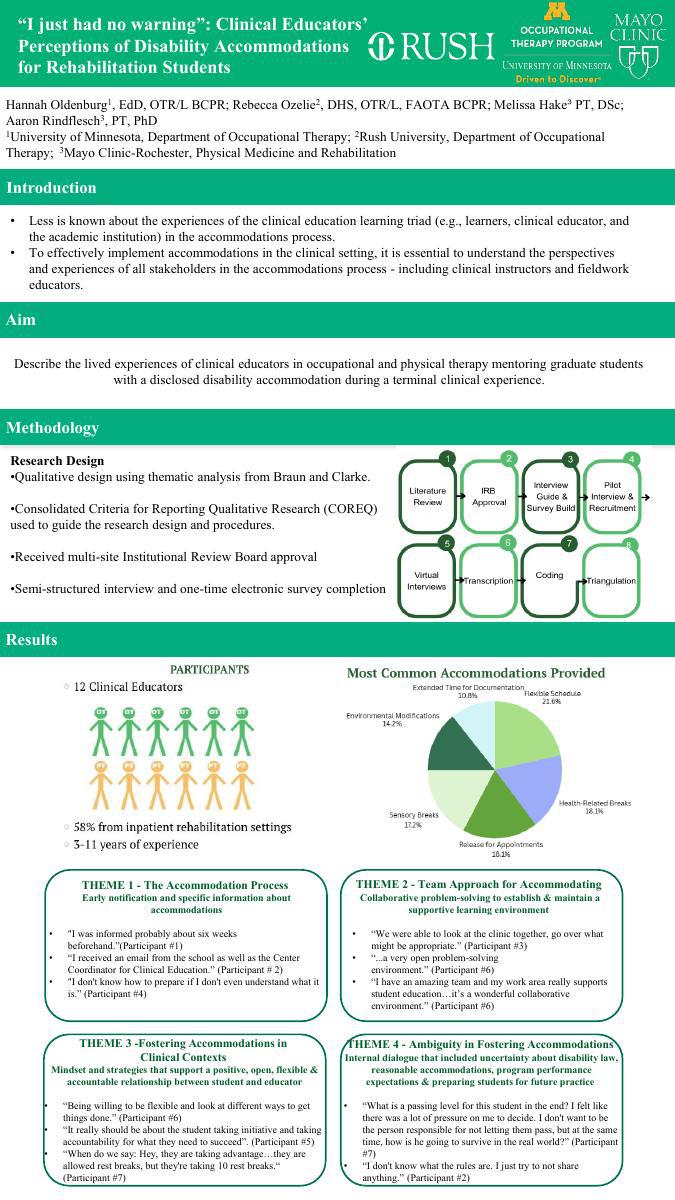
Introduction / Rationale: Although research documents accommodation use in graduate health science programs, little is known about clinical preceptors' experiences mentoring occupational therapy (OT) and physical therapy (PT) students with disclosed accommodations during fieldwork experiences. This gap highlights the need to explore preceptors' perspectives on supporting these students in clinical settings.
Objectives: This study aimed to describe clinical preceptors' perspectives on their preparedness to mentor OT and PT students with formal disability accommodations during fieldwork experiences.
Methods / Approach: Using Braun and Clarke's thematic analysis approach, semi-structured interviews were conducted with 12 clinical preceptors who had mentored at least one OT or PT student with formal disability accommodations during fieldwork. Interviews were analyzed through a two-stage iterative process to identify key themes.
Results / Practice Implications: Analysis revealed four major themes: (1) Accommodation Process – developing procedures and timelines for implementation; (2) Team Approach for Accommodating – collaboration among students, faculty, and clinical teams; (3) Fostering Accommodations in Clinical Contexts – identifying attitudes and mindsets that facilitate success; and (4) Ambiguity in Facilitating Accommodations – navigating legal, professional, and institutional requirements. Practical recommendations were developed based on these findings.
Conclusion / Contribution to the Occupational Therapy Profession: This study highlights the critical role of clinical preceptors in fostering inclusive clinical education environments. The insights and recommendations contribute to understanding how to enhance preceptor readiness and promote equitable learning opportunities in occupational and physical therapy education.