
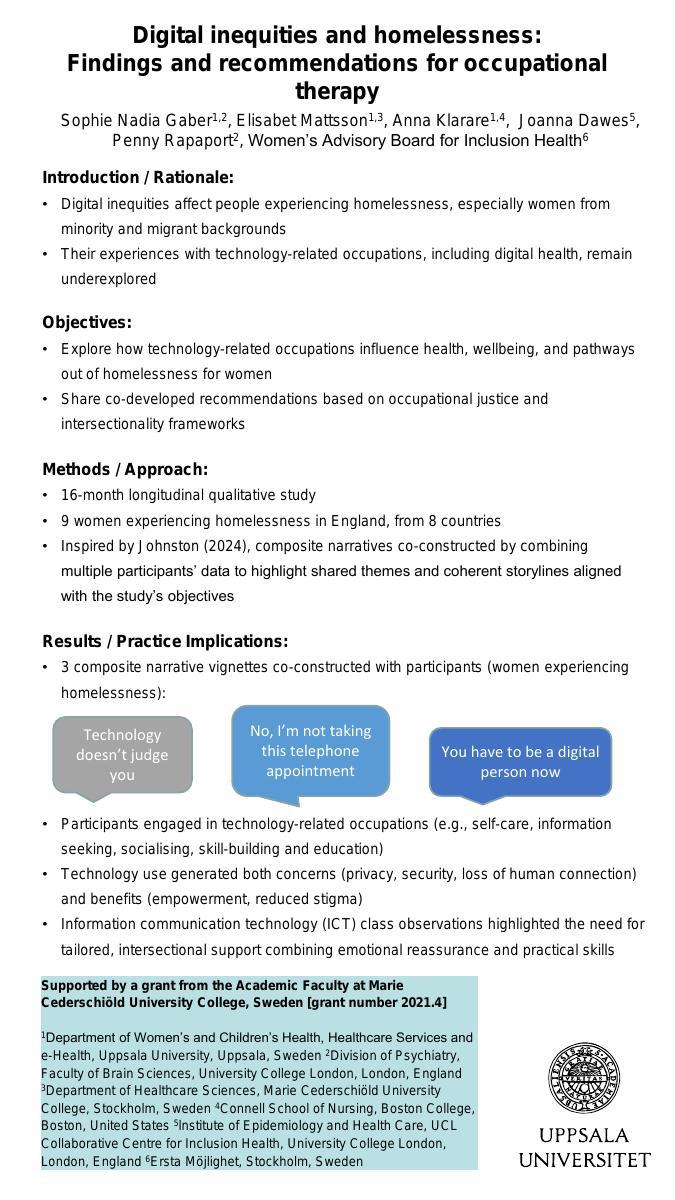
Introduction / Rationale: Digital inequities can challenge people experiencing homelessness as health and social care increasingly rely on technology. Women experiencing homelessness from minority and migrant backgrounds are disproportionately affected, yet their lived experiences of engaging in technology-related (including digital health) occupations, remain underexplored.
Objectives: This study explored how engagement in technology-related, including digital health occupations, can enable and/or disable health and wellbeing and paths out of homelessness for women.
Using occupational justice and intersectionality theories, we will share findings and recommendations that were developed with participants and an advisory board of women with lived experience of homelessness.
Methods / Approach: We performed a 16-month longitudinal qualitative study in England with nine women experiencing homelessness from eight countries. Data were collected and analysed using narrative interviews and observations of participants and facilitators in information and communications technology (ICT) classes at a homelessness organisation.
Results / Practice Implications: Participants engaged in technology-related occupations such as self-care, information searching, socialising, entertainment, skill-building and education. While concerns about security, privacy, and loss of human connections were expressed, participants also described feeling empowered and reduced stigma when using technology. Observations from ICT classes revealed a need for tailored, intersectional support combining emotional reassurance with practical skills to enable engagement in technology-related occupations.
Conclusion / Contribution to the occupational therapy profession: We highlight opportunities for occupational therapists to address digital inequities, promote health and wellbeing, and support paths out of homelessness for this growing yet underserved population. Findings will be used to co-design a digital health intervention.