
Introduction: The innovative teaching model created by North Central College (NCC) addresses significant gaps in the readiness of entry-level occupational therapy (OT) practitioners for upper extremity rehabilitation in outpatient settings. The ASHT 2022 National Survey, conducted by NCC, included 201 respondents, among whom were 61 students. The findings revealed notable challenges in intervention knowledge (24%), anatomy (21%), lab curriculum (17%), and mentorship (17%), with students reporting low levels of preparedness. A misalignment exists between academic training and professional expectations, particularly in specialized areas like hand therapy.
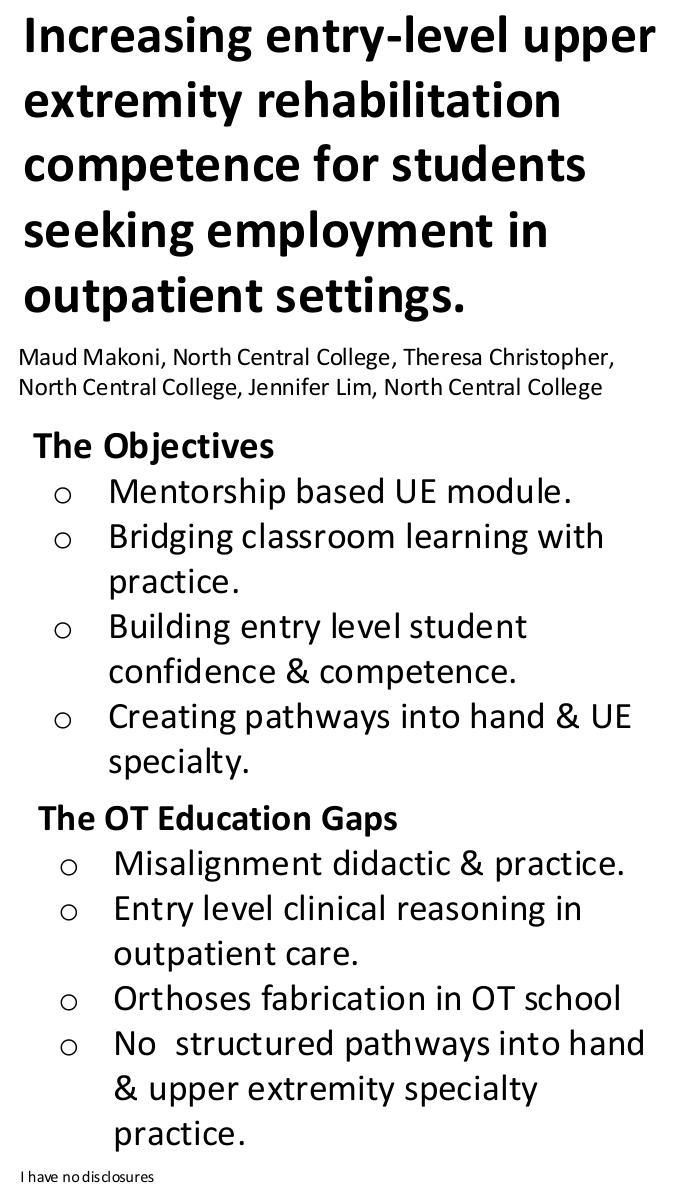
Objectives: To bridge the gap between knowledge and experience in OT education, enhance entry-level practitioners' confidence and competence, improve hands-on orthotic fabrication training, align academic preparation with fieldwork expectations, and create pathways for graduates to enter the specialty.
Methods / Approach: NCC developed the Hand Study Group, a Level Two fieldwork preparatory initiative and a mentorship-driven, extracurricular program piloted over two academic terms. Students participated in bi-weekly sessions focusing on common outpatient diagnoses: wrist fractures, thumb arthritis, and carpal tunnel syndrome. The program included hands-on orthotic fabrication, evaluation, and intervention design training, supported by a comprehensive resource binder and student-led IPE. The collaborative group objectives aligned the field and the classroom.
Practice Implications: The program enhanced student confidence and clinical readiness, evidenced by significant improvements in orthotic fabrication skills and diagnosis-based interventions. It also fostered partnerships with local clinics, creating pathways for graduates to enter specialty practice.
Conclusion: This scalable model emphasizes mentorship, advanced anatomy modules, and collaboration with organizations like AOTA and WFOT. It demonstrates how targeted interventions can transform OT education, advancing the profession while addressing evolving OT community needs.