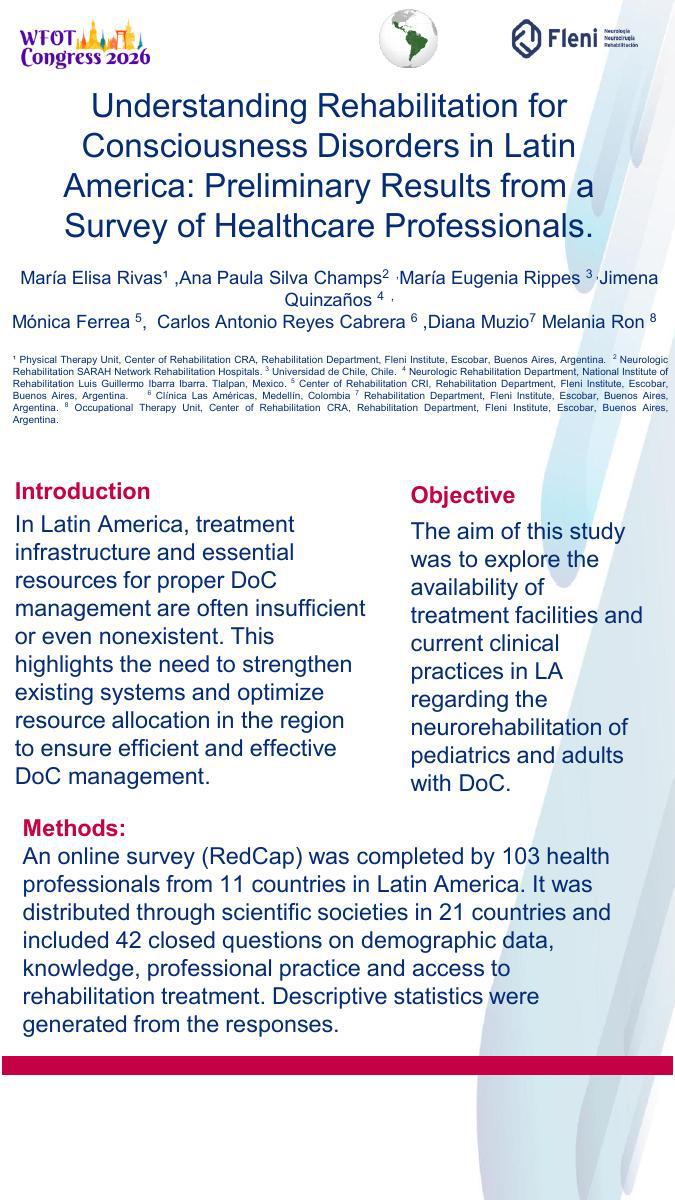
Introduction: Recent guidelines on disorders of consciousness (DoC) propose strategies to enhance care. In Latin America, there is a lack of information on current clinical practice, and a survey of professionals could be key to improving treatment. This study explored the availability of treatment facilities and current clinical practices in Latin America regarding the neurorehabilitation of pediatrics and adults with DoC. Methods: An online survey (RedCap) was completed by 103 health professionals from 11 countries in Latin America. It was distributed through scientific societies. The survey featured closed questions, and descriptive statistics were generated from the responses. Results: Mean age of 42 years (SD = 10), and 70.7% female. The mean experience was 10 years in DoC. Key countries represented were Argentina (58%), Mexico (17%), and Brazil (10%), with 52% being physicians. The most common time from injury was 3 to 12 months, with 39% receiving treatment in rehabilitation centers. Familiarity with clinical practice guidelines was noted by 44%, and 80% implemented them fully or partially. About 39.4% had structured programs for treating DoC patients. The most common rehabilitation duration was 3-6 months (35.4%).Pharmacological interventions included medications for spasticity (76%), central nervous system stimulants (44%), pain control (58%), and wakefulness enhancers (52%). Professionals had access to both high-tech (40%) and low-tech technology devices (66%). The most common discharge destination was home (75%), Conclusion: This survey reveals significant gaps between clinical practice guidelines and actual rehabilitation of individuals with DoC in LA. Despite familiarity with these guidelines, resources and limited access to specialized programs impede effective treatment. Most patients return home after discharge, emphasizing the need for effective home-based rehabilitation strategies.
