
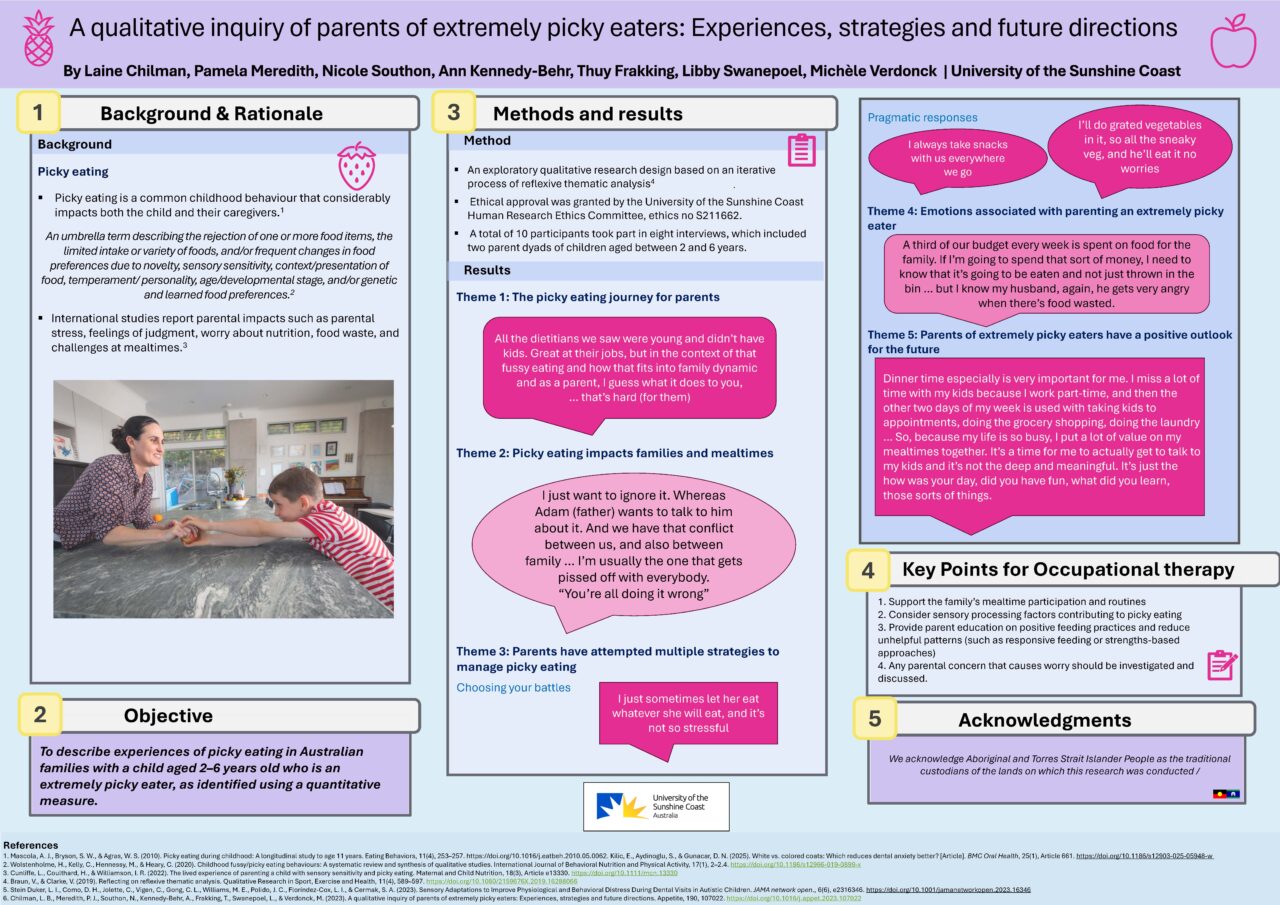
Introduction / Rationale: Picky eating is a common parenting challenge, often impacting family dynamics and mealtime experiences. Limited qualitative studies have explored parents' lived experiences of raising extremely picky eaters. This study aimed to address this gap by capturing parents' perspectives and strategies for managing their children's picky eating behaviours.
Objectives: This study seeks to understand the experiences of parents raising extremely picky eaters, the impact on family life, the strategies used, and their perspectives on professional support and future expectations.
Methods / Approach: This exploratory qualitative research design included participants who were Australian-based parents (n = 10) of children aged 2–6 years with a minimum picky eating score of 3.33, indicating extreme picky eating, on the Food Fussiness subscale of the Child Eating Behavior Questionnaire (CEBQ). Parents were interviewed online via Zoom using semi-structured interviews focused on their experiences of having a child who is a picky eater. Reflexive thematic analysis was used to analyse the data.
Results / Practice Implications: Five themes were identified: 1: The picky eating journey for parents. 2: Picky eating impacts families and mealtimes. 3: Parents have attempted multiple strategies to manage picky eating. 4: Emotions associated with parenting an extremely picky eater. 5: Parents of extremely picky eaters have a positive outlook for the future.
Conclusion / Contribution to the occupational therapy profession: Parents value health professionals who acknowledge their concerns and provide evidence-based mealtime support. Occupational therapists can support families by offering practical strategies to improve mealtime interactions and overall family well-being.