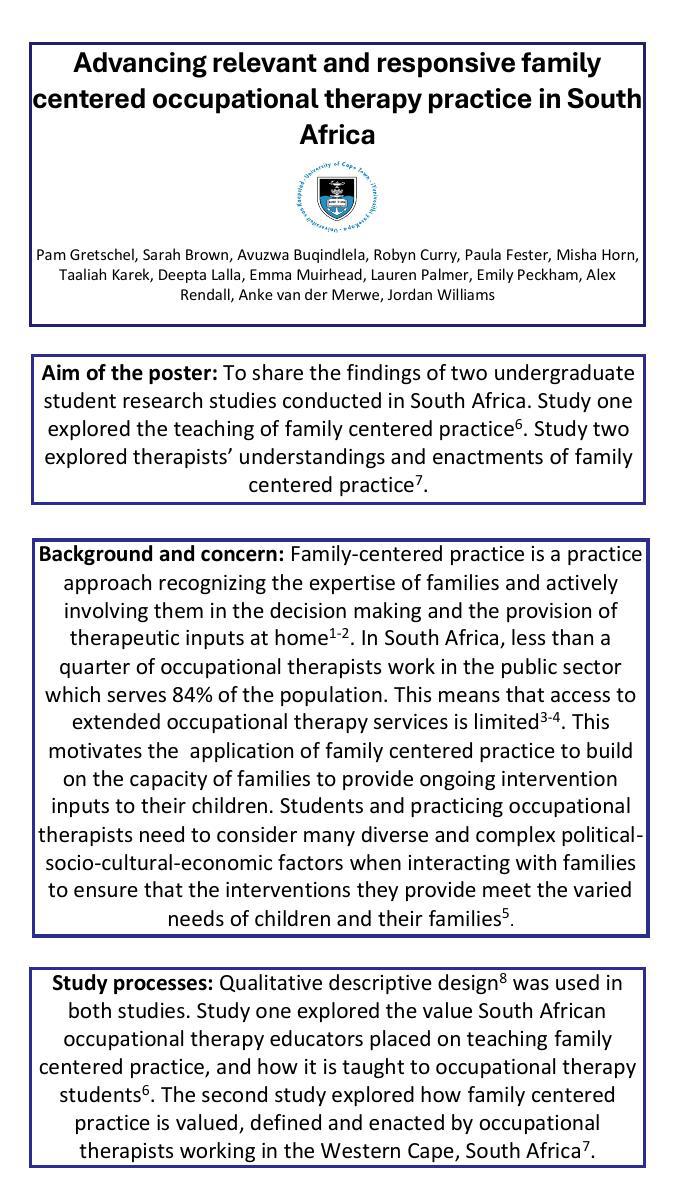
Introduction: In South Africa, complex political-socio-cultural and economic factors challenge the teaching and enactment of Family Centred Practice (FCP) in occupational therapy. In this poster I will share the theorisation of the findings of two studies. Study one explored the teaching of FCP by occupational therapy educators. Study two is ongoing and is exploring occupational therapists enactment of FCP.
Methodology: Qualitative descriptive design, inclusive of individual interviews and focus groups sought to explore how FCP is taught and enacted, and to capture the barriers and enablers to FCP in context.
Findings: Eight educators from three universities in South Africa participated in study one. The theme No set programme or process revealed that FCP content was covered to varying degrees at each university. Educators’ familiarity with FCP determined what they taught. The theme, Striving to do more but… highlighted that while educators were ardently supportive of FCP, contextual factors limited the opportunities they could provide to students to build on their skills in FCP. Recommendations made included more intentional involvement of families in teaching, immersion in professional development in FCP, and extending on opportunities for students to connect with families. Study two is ongoing.
Conclusion: The theorisation of the data generated from these studies will inform the development of a practice model for FCP which is aligned to and responsive to the occupational needs of the children and their families living in South Africa.
