
Introduction/Rationale: Parkinson’s disease (PD) is a common neurological disorder that requires a complex approach.
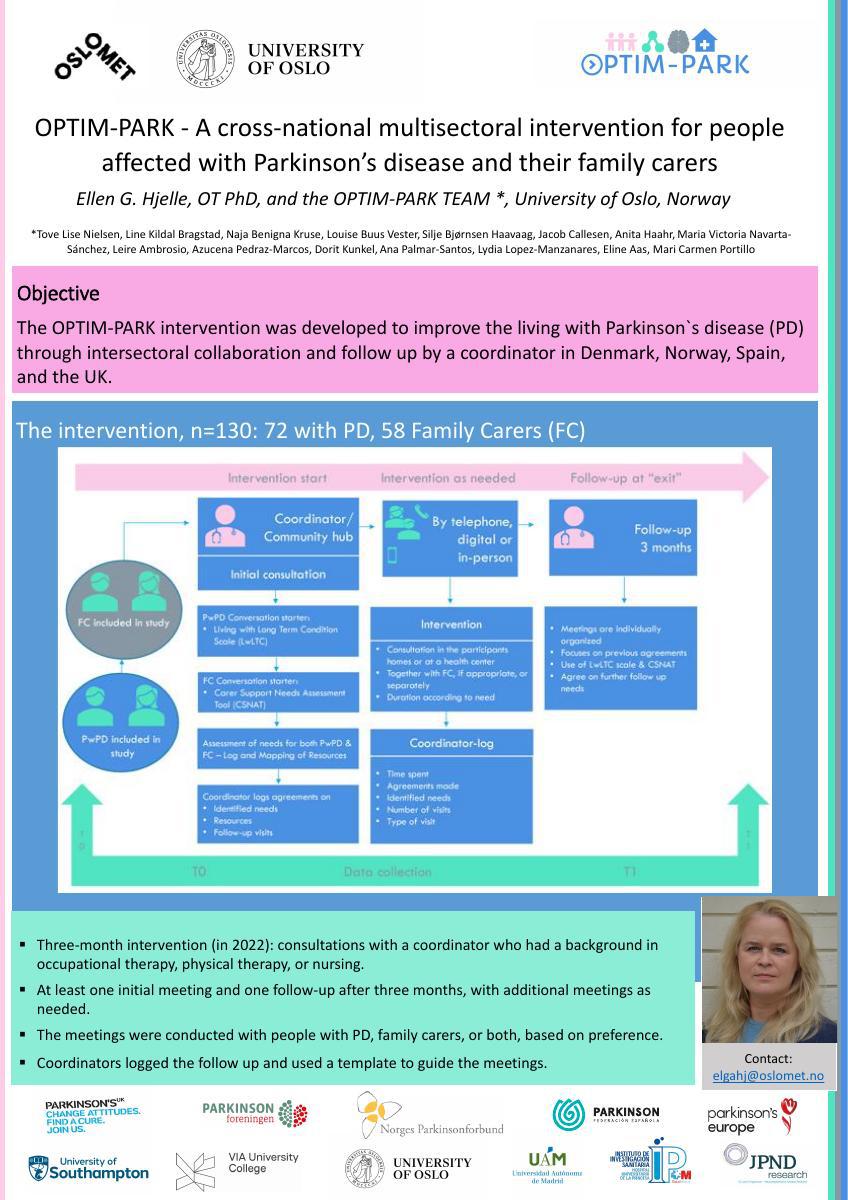
Objectives: The OPTIM-PARK intervention was developed to improve the living with PD through intersectoral collaboration and follow up by a coordinator in Denmark, Norway, Spain, and the UK.
Methods/Approach: The three-month OPTIM-PARK intervention included face-to-face, digital or telephone consultations with a PD coordinator who had a background in occupational therapy, physical therapy, or nursing. Participants had at least one initial meeting and one follow-up after three months, with additional meetings as needed. The meetings were conducted with people with PD, family carers, or both, based on preference. Coordinators logged the follow up and used a template to guide the meetings, detailing resources beneficial to people with PD and family carers across "Body function and structure," "Activity and participation," and "Environmental factors." Each country identified local resources fitting these classifications.
Results/Practice Implications: Fifty-eight coordinator logs were collected. Most intervention topics were raised by the participant with PD, while family carers focused on the person with PD needs, providing direct help or increasing training and general follow-up. Key issues included disease management, exercise, home care, practical help, and social support. The OPTIM-PARK intervention highlighted the importance of tailored, person-centered care and intersectoral collaboration in managing Parkinson’s disease.
Conclusions and contribution to the occupational therapy profession: The intervention shows how occupational therapists and other health care professionals, through personalized care and collaboration, can address complex needs, enhance quality of life, and support the management of long-term conditions, such as PD.