
Introduction : The occupational performance of adults with trigger finger (TF) after splinting has not been well discussed in the literature.
Objectives : To determine the occupational performance in adults with TF after receiving splinting intervention and its relationship with upper limb disability.
Methods : Thirty-five adults aged 21 or above, diagnosed with single or multiple TF and unilateral or bilateral TF, were recruited in this study. They received a 6-week splinting intervention (metacarpophalangeal joint blocking splint or relative motion splint). Occupational Performance was assessed using the Canadian Occupational Performance Measure (COPM). Upper limb disability was assessed using the Disabilities of the Arm, Shoulder and Hand (DASH) outcome measure. The occupational performance selected by participants was categorized into occupations according to the Occupational Therapy Practice Framework: Domain and Process – Fourth Edition. Pearson’s correlation coefficient was used to determine the relationship between occupational performance and upper limb disability.
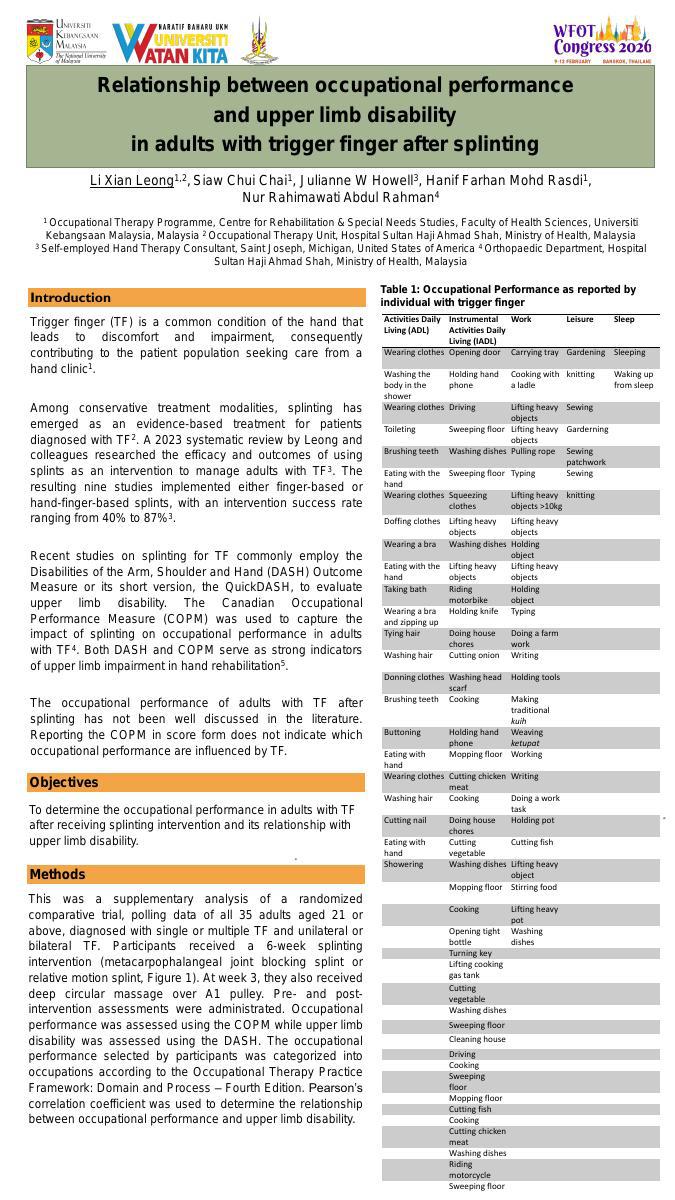
Results : The most reported occupation category was instrumental activities of daily living (42), followed by work (26), activities of daily living (23), leisure (7), and rest and sleep (2). A significant moderately negative relationship existed between the DASH and COPM performance score (r = -0.496, p = 0.002) and COPM satisfaction score (r = -0.374, p = 0.027), respectively.
Conclusion : Reduced upper limb disability tends to improve occupational performance after splinting in adults with TF.