
Introduction / Rationale: Hired farmworkers are one of the most vulnerable populations in the United States, with low wages, long hours, and language challenges. Occupational safety, lifestyle patterns, and care access markedly impacts their health. Little is known about farmworkers when they leave the workforce. What is their health status, is role identity impacted, are new roles assumed upon separation?
Objectives: 1. Identify baseline health characteristics of separated farmworkers. 2. Identify the extent employment/role transition influences identity.
Methods: A 93-item questionnaire was translated into Spanish including the Clinical Dementia Rating Scale, the Role Checklist, the US Health & Retirement Study, and the National Agricultural Worker Survey. Phase 1 was to complete cultural validation of the questionnaire with native speakers and, phase 2 piloted the English and Spanish versions. A targeted electronic advertisement was disseminated online and participants received a $20 (USD) gift card.
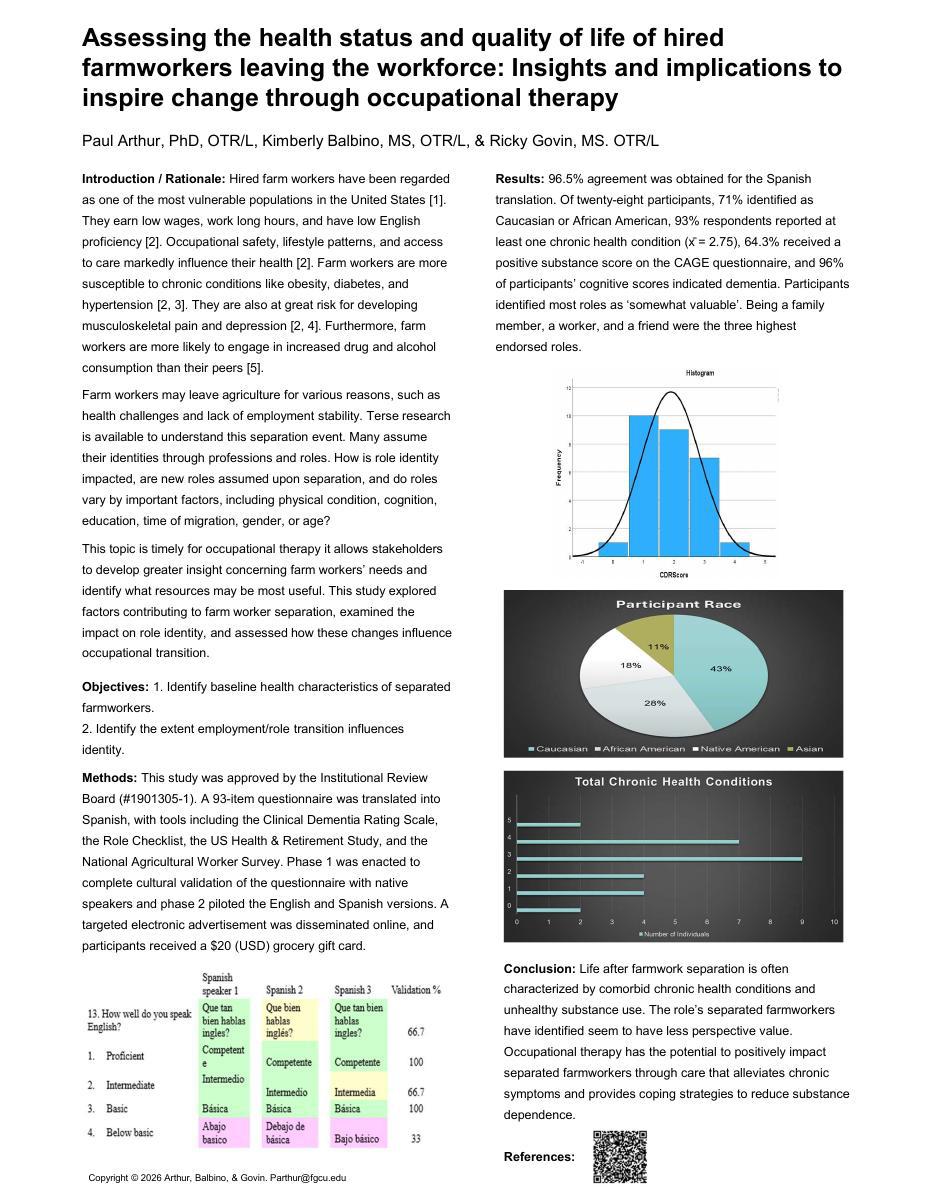
Results: 96.5% agreement was obtained for the Spanish translation. Of twenty-eight participants, 71% identified as Caucasian or African American, 93% respondents reported at least one chronic health condition (x̄ = 2.75), 64.3% received a positive substance score on the CAGE questionnaire, and 96% of participants’ cognitive scores indicated dementia. Participants identified most roles as ‘somewhat valuable’. Being a family member, a worker, and a friend were the three highest endorsed roles.
Conclusion: Life after farmwork separation is often characterized by comorbid chronic health conditions and unhealthy substance use. The role’s separated farmworkers have identified seem to have less perspective value. Occupational therapy has the potential to positively impact separated farmworkers through care alleviating chronic symptoms and in coping strategies to reduce dependance on substances.