
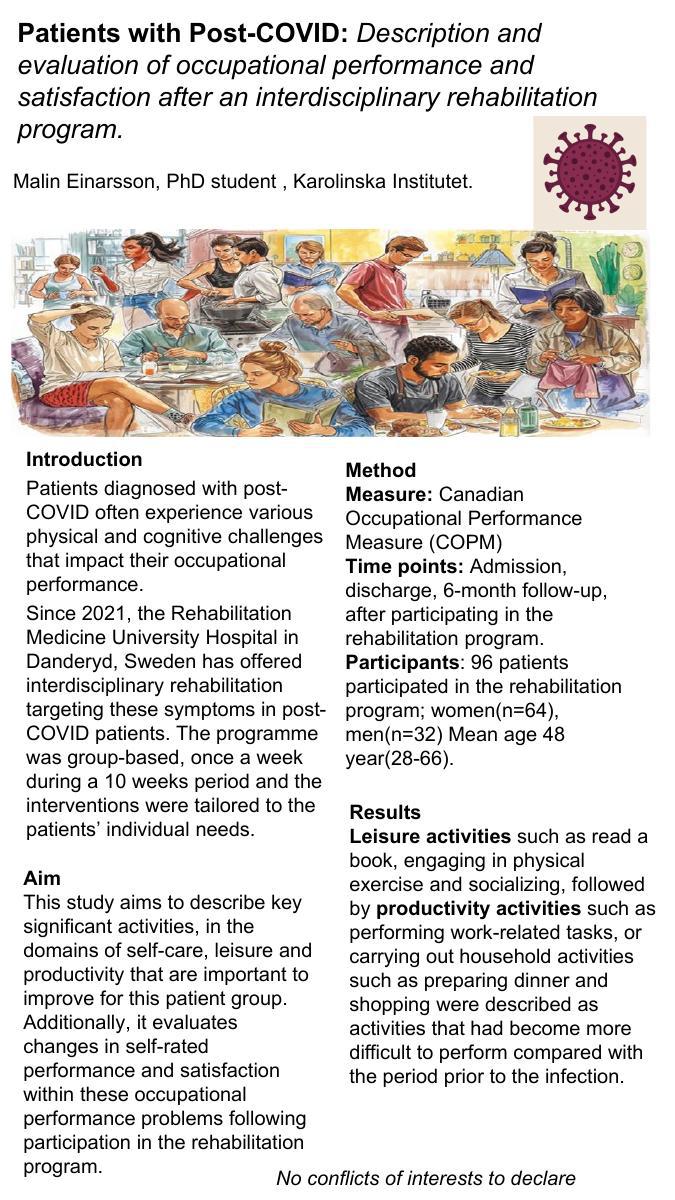
Introduction: Patients diagnosed with post-COVID often experience various physical and cognitive challenges that impact their occupational performance. The most commonly reported symptoms include fatigue and cognitive impairments. Since 2021, the Rehabilitation Medicine University Hospital in Danderyd, Sweden has offered interdisciplinary rehabilitation targeting these symptoms in post-COVID patients.
Objectives: This study aims to describe key occupational performance problems in the domains of self-care, leisure and productivity. Additionally, it evaluates changes in self-rated performance and satisfaction with for these occupational problems following participation in an interdisciplinary rehabilitation program.
Method: The Canadian Occupational Performance Measure (COPM) was used to identify occupational problems and assess performance and satisfaction levels at admission, discharge and six months post-rehabilitation. Data collection is ongoing and is expected to conclude by the end of 2025.
Preliminary Results: Data has been collected from 55 patients (mean age 48 years, 64% women). Preliminary results indicate statistically significant improvements in occupational performance six months after rehabilitation. Occupational satisfaction improves immediately following rehabilitation and remains stable six months later. Most reported occupational problems are related to leisure activities, such as exercising and socializing, followed by productivity tasks, such as work and household responsibilities.
Conclusion: These findings provide valuable insights into the challenges faced by post-COVID patients and highlight the positive impact of interdisciplinary rehabilitation. The results may inform the development of tailored occupational therapy interventions to better address the specific needs of this patient population.