
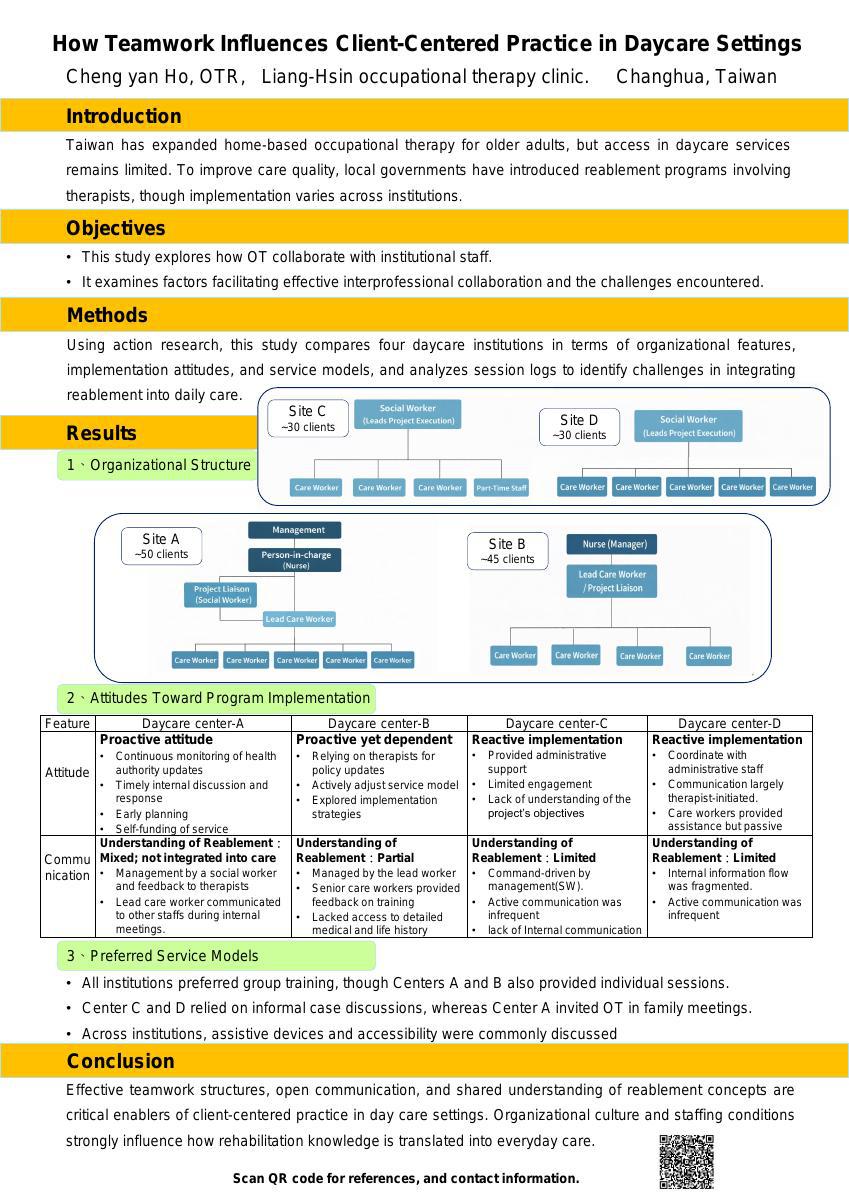
Introduction:Taiwan's long-term care policies have expanded access to occupational therapy for elderly individuals at home; however, many daycare services still lack access. To enhance the quality of care, local governments have introduced reablement-focused programs that invite therapists to provide interventions. However, implementation of these programs varies due to institutional differences.
Objectives:This study examines how occupational therapists collaborate with institutional staff during the implementation of reablement programs by local governments. It analyzes the factors that facilitate interprofessional collaboration as well as the challenges encountered in delivering reablement interventions.
Methods: Using action research methodology, this study examines four distinct daycare institutions and compares them across three dimensions: organizational size and structure, attitudes toward program implementation, and preferred service models. Additionally, service logs from each session are analyzed to identify challenges in integrating the reablement concept into daily care practices.
Results:The study identifies several factors that influence the implementation of reablement programs. These factors include the organizational structure and work culture of daycare institutions, the attitudes of institutional leaders toward program execution, frontline care workers' comprehension of the reablement concept, and the trust relationship between institutions and therapists.
Conclusion:In conclusion, the implementation of reablement programs allows older adults in daycare services to access occupational therapy. However, the effectiveness of these programs relies on the collaboration between occupational therapists and daycare institutions. To enhance the quality of life for older adults, occupational therapists must comprehend the unique operational characteristics of various organizations and gradually tailor their interventions to meet these specific needs.