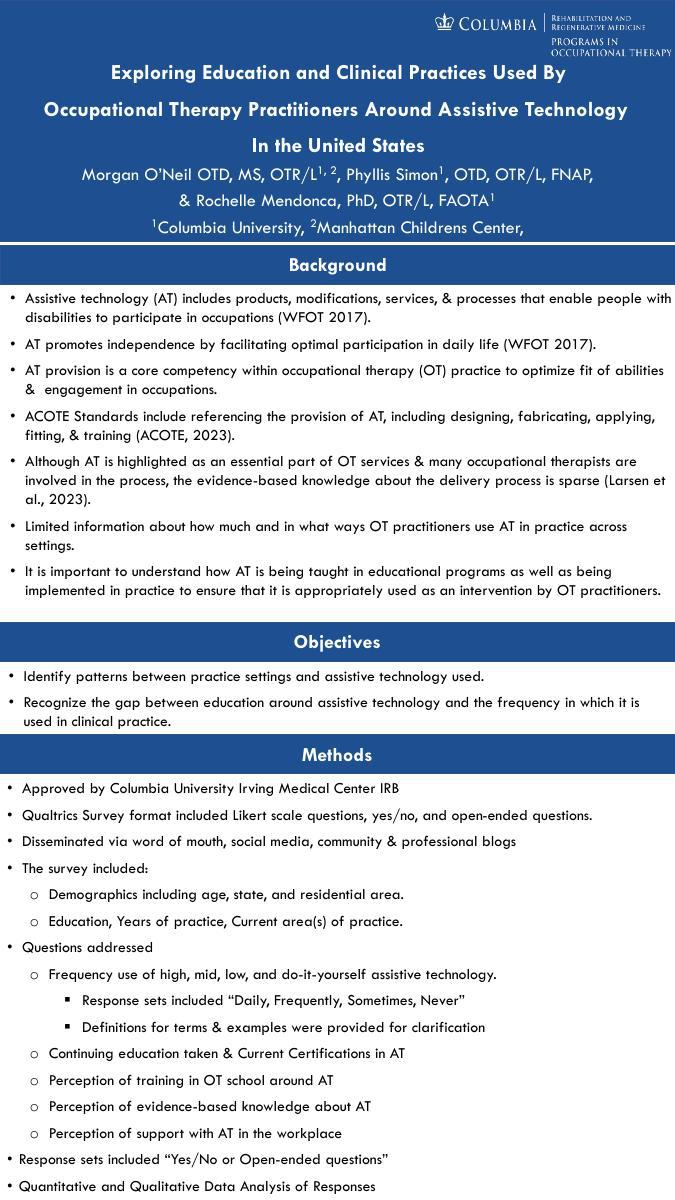
Introduction: Assistive technology (AT) includes products, modifications, services, and processes that enable people with disabilities to participate in occupations (WFOT, 2017). The World Federation of Occupational Therapy advocates that AT provision is a core competency within occupational therapy (OT) practice to optimize engagement in occupations. Additionally, the Accreditation Council for Occupational Therapy Education includes standards referencing the provision of AT, including designing, fabricating, applying, fitting, and training (ACOTE, 2023). Although AT is an essential part of OT, the evidence-base about the delivery process is sparse (Larsen et al., 2023). Objective: To address this gap, a survey was completed by 127 occupational therapy practitioners (OTPs) to understand their use of AT in practice, AT education they received, and AT continuing education. Methods: Participants were recruited across ages, states, and practice settings. OTPs identified the type of AT (e.g., high, mid, low) they use most frequently and answered qualitative questions about their experience with learning about AT in OT school as well as questions about continuing education related to AT. Results: The data showed that 50% of participants reported using AT daily in their practice, but responses were varied about the adequateness of their education. Seventy-seven percent of the participants said they received no additional training from their workplace; and 53% reported they had not sought out additional continuing education. Conclusion: Raising awareness about the value of AT in practice among OTPs, starting with OT education, is an important first step to ensure that AT is used as an intervention.
