
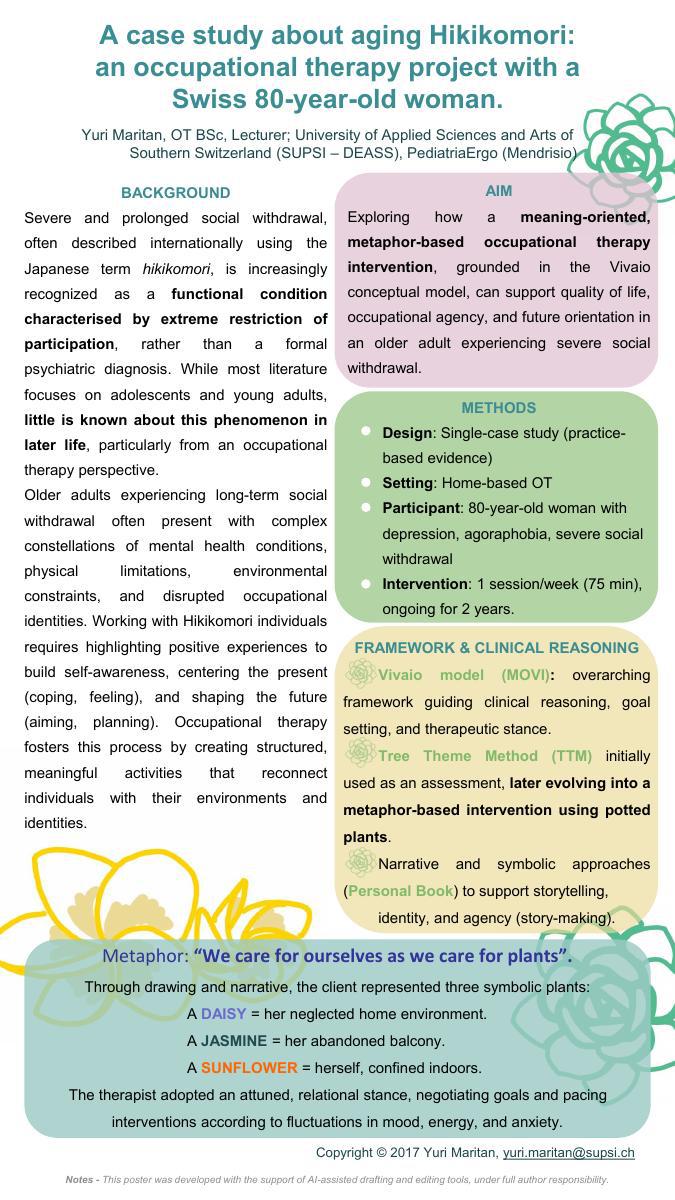
Introduction / Rationale: Working with Hikikomori individuals requires highlighting positive experiences to build self-awareness, centering the present (coping, feeling), and shaping the future (aiming, planning). Occupational therapy fosters this process by creating structured, meaningful activities that reconnect individuals with their environments and identities.
Objectives: This case presents an 80-years-old woman with major depression and agoraphobia, socially withdrawn for five years. The intervention integrated the Italian conceptual model Vivaio and the Tree Theme Method to promote a story-making process.
Methods / Approach: Using the metaphor “we should care for ourselves as we do for plants,” the woman draw three symbolic plants: a daisy (her neglected home), a jasmine (her abandoned balcony), and a sunflower (herself, confined indoors). The intervention goals were enhancing her home environment, resuming gardening, and identifying meaningful external activities. The Overall Anxiety Severity Impairment Scale was used.
Results / Practice Implications: The client improved significantly in mood and engagement, revitalizing her home and balcony while becoming more proactive. She accepted a housekeeper’s help, increased therapeutic sessions, and developed creative goals, crafting gifts. She later expressed a desire to attend a theater play – her first planned outing in years.
Conclusion / Contribution to the occupational therapy profession: By integrating diverse approaches and models into a cohesive and personalized framework, adapted to the client’s experiences and metaphors, the intervention facilitated meaningful engagement and gradual reintegration into life beyond confinement. The occupational therapist’s attuned presence, ability to co-create goals, and engagement in the client’s symbolic world were crucial in fostering motivation, resilience, transformation. This holistic and relationship-centered approach proves essential in addressing complex cases.