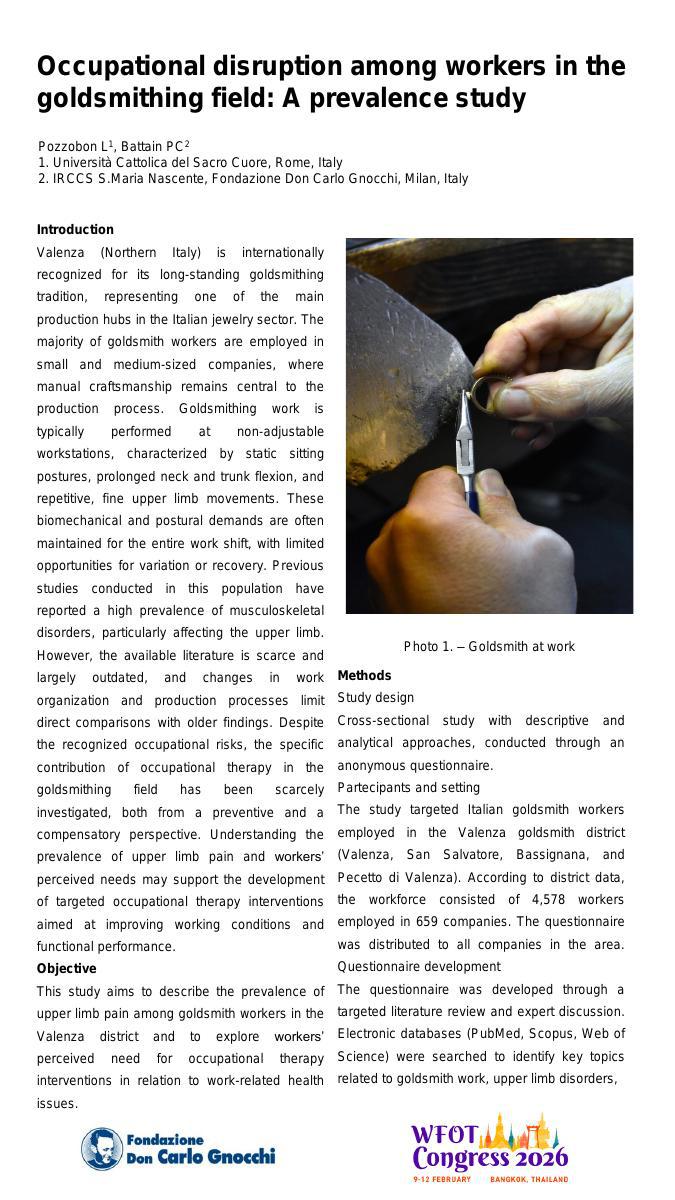
Introduction / Rationale: The goldsmithing industry in Valenza, Italy, has a long-standing tradition, but workers in this sector face significant posture-related risks and musculoskeletal health issues.
Objectives: This study aimed to evaluate the prevalence of upper limb pain among goldsmith workers and explore the potential benefits of occupational therapy interventions.
Methods / Approach: A cross-sectional study was conducted among 4,578 Italian goldsmith workers using a structured questionnaire, which included the QuickDASH scale. The survey assessed pain prevalence, occupational therapy needs, and associated factors. Data were analyzed using descriptive statistics, prevalence rates, and odds ratios.
Results / Practice Implications: Out of 4,500 distributed questionnaires, 389 were completed (response rate: 8.6%). Forty workers reported pain with a formal diagnosis, with tendinitis and carpal tunnel syndrome being the most common conditions. Workers born between 1960 and 1970 had a significantly higher odds ratio for pain (OR: 2.64, CI 95%: 1.32–5.25), as did cleaners (OR: 2.48, CI 95%: 1.10–5.60). Over 75% of participants with diagnosed pain expressed interest in occupational therapy. However, the study's low response rate and the exclusion of undiagnosed participants limited the findings.
Conclusion / Contribution to the occupational therapy profession: The study highlights a notable prevalence of upper limb pain among goldsmith workers and indicates a strong interest in occupational therapy interventions. Despite its limitations, these findings underline the need for ergonomic improvements and preventive health strategies in this workforce.
