
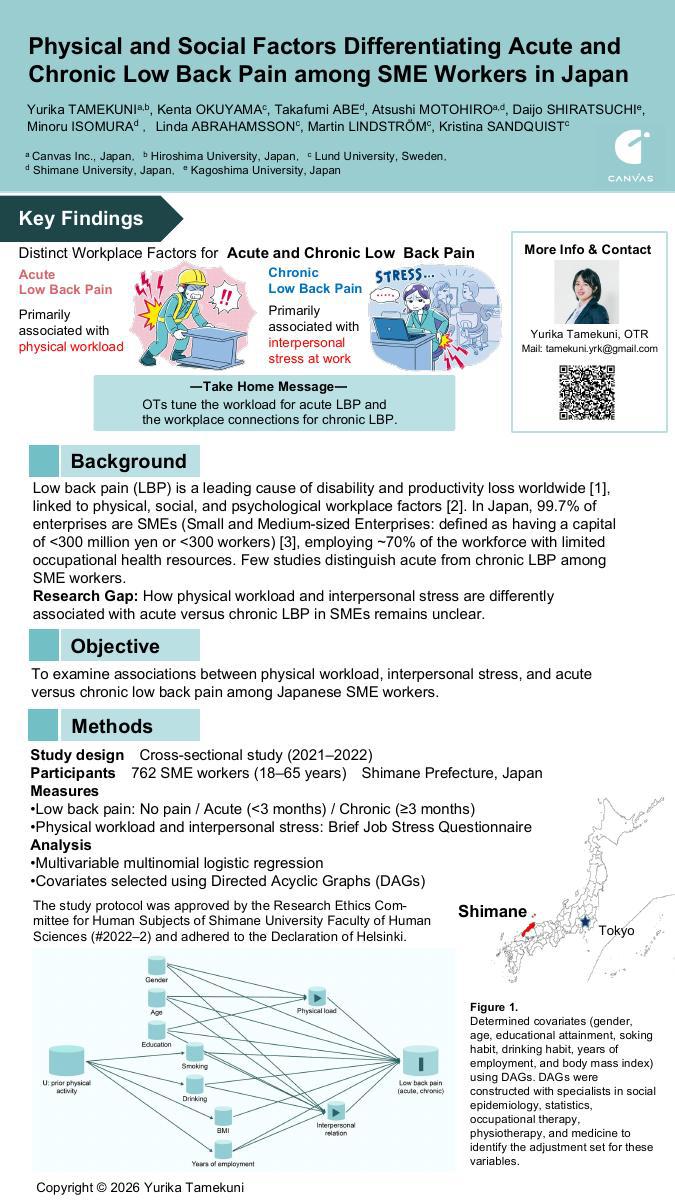
Introduction: Low back pain has the potential to significantly affect the well-being and productivity of workers. Although 99.7% of Japanese businesses are small and medium-sized enterprises (SMEs), the physical and social factors contributing to both acute and chronic low back pain among SME workers remain insufficiently understood. Elucidating these factors is crucial for the prevention of low back pain among SME workers.
Objectives: This study aimed to examine associations between physical and social factors and low back pain among Japanese SME workers.
Methods: We analyzed health survey data collected in 2022 from 762 workers aged 18–65 years at SMEs in Shimane, Japan. Acute and chronic low back pain were assessed alongside workplace physical factors (physical load) and social factors (stress of interpersonal relations) using the brief job stress-related questionnaire. Associations were evaluated using multivariable multinomial logistic regression, with covariates determined through directed acyclic graphs.
Results: Among participants, 50.1% reported acute low back pain and 6.3% reported chronic low back pain. Lower physical workload was associated with reduced odds of acute pain (OR: 0.41, 95% CI: 0.23, 0.72). For chronic pain, lower stress of interpersonal relations showed reduced odds of chronic pain (OR: 0.37, 95% CI: 0.15, 0.88).
Conclusion: Reducing physical workloads may help mitigate acute low back pain, while lowering stress of interpersonal relations could reduce chronic low back pain among SME workers. These findings suggest potential applications for our innovative health and productivity management support program as occupational therapy interventions. Future studies should examine the longitudinal effectiveness of occupation-based approaches targeting physical and social factors.