
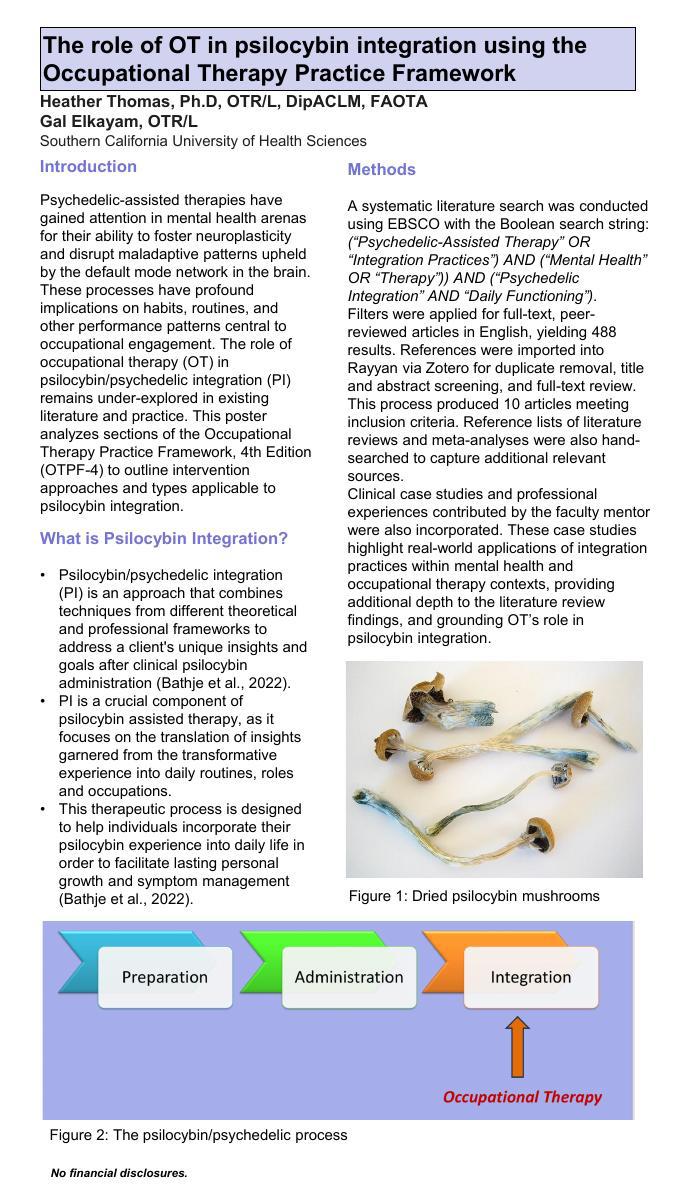
Introduction: Psychedelic-assisted therapies have gained attention in mental health practice for their ability to foster neuroplasticity and disrupt maladaptive patterns upheld by the default mode network. These processes have profound implications on habits, routines, and other performance patterns central to occupational engagement. The role of occupational therapy (OT) in psychedelic integration (PI) remains underexplored in existing literature and practice. This poster analyzes sections of the Occupational Therapy Practice Framework, 4th Edition (OTPF-4) to outline intervention approaches and types applicable to psilocybin integration.
Objectives: Understanding OT’s role in PI by delineating relevant aspects of the domain and process from the OTPF-4.
Methods: Methods include analysis of OTPF-4 domain and process sections for their applicability to PI as presented in current research and legal practices in the U.S., a review of existing PI literature, and case reports from OT’s and practitioners working in PI.
Practice Implications: This project underscores the potential for OT to address gaps in current integration practices, align with interdisciplinary mental health models, and expand OT practice to include this effective method for neuroplasticity.
Conclusion: OT can play a pivotal role in supporting clients ability to translate insights into action toward improved occupational engagement, ensuring sustainability of positive outcomes of psilocybin treatment. By integrating OT principles and PI research, this work advances OT’s capacity to advocate for holistic approaches in emerging mental health practice, and engage in evidence-based approaches to enhance occupational participation and quality of life.