
Introduction / Rationale:
Effective leadership is vital in occupational therapy. While traditional leadership models emphasize skills, resilience factors like grit—passion and perseverance toward long-term goals—are less explored. Grit is linked to individual success, yet its role in shaping leadership qualities and emotional intelligence remains understudied. The development of occupational therapy leaders is an area of limited research. As the next generation of OT leaders emerges, understanding the factors that support their growth is crucial.
Objectives:
This study examines how resilience, particularly grit, contributes to effective leadership. It aims to identify resilient leadership behaviors and assess their impact on team performance, organizational dynamics, and societal progress. It seeks to identify behaviors that define resilient leaders and assess their impact on team performance, organizational dynamics, and societal progress.
Methods / Approach:
Using a mixed-methods design, quantitative data will be collected through validated assessments measuring grit, emotional intelligence, and leadership competencies among occupational therapy leaders. Qualitative interviews explore lived experiences of resilience in leadership, with thematic analysis identifying key patterns.
Results / Practice Implications:
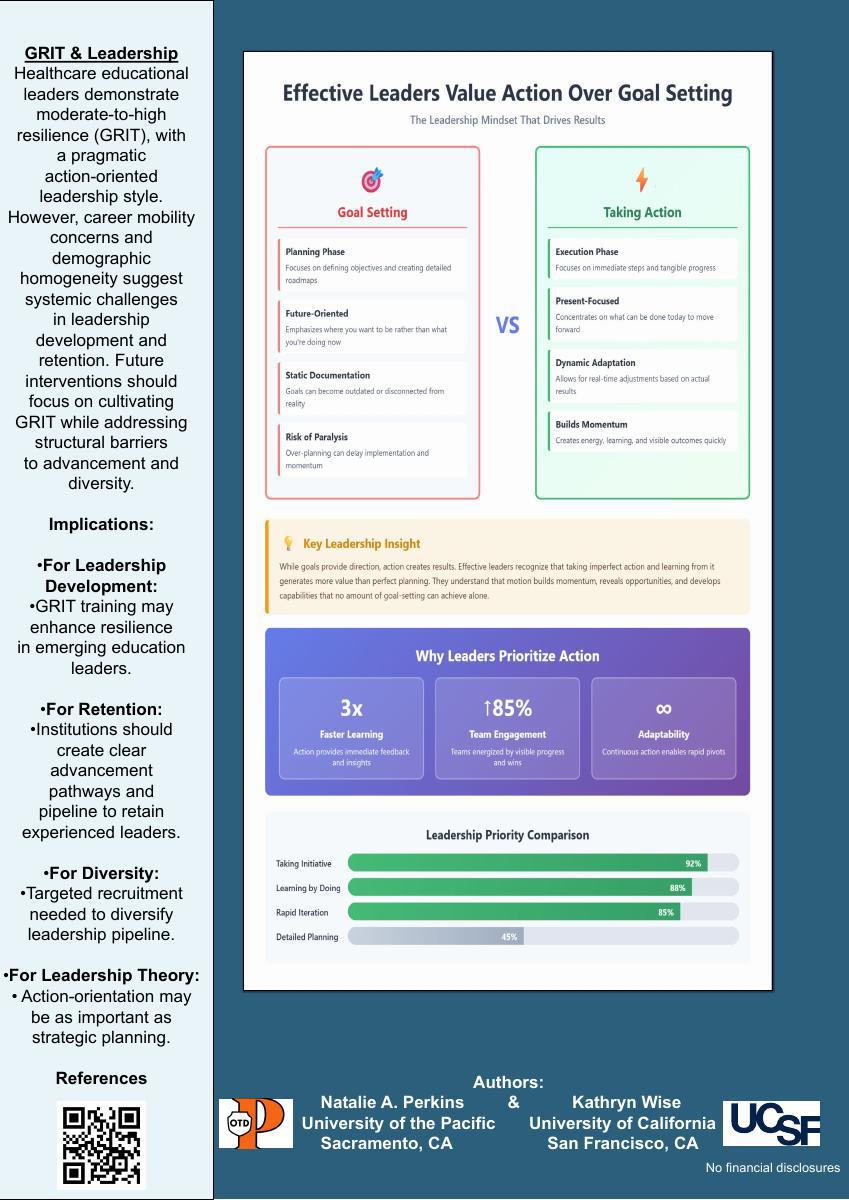
Preliminary findings suggest resilience enhances leadership by fostering perseverance, innovation, and team inspiration. Implications include integrating resilience-building strategies into leadership training to prepare OTs for complex professional challenges. Implications include integrating resilience-building strategies into leadership training programs to prepare occupational therapists for complex professional challenges.
Conclusion / Contribution to OT:
This study highlights the essential role of resilience, particularly grit, in promoting effective leadership within OT. By addressing research gaps, it informs strategies to cultivate resilient leaders who can drive progress in practice, education, and advocacy. Strengthening resilience in leadership enhances the profession’s capacity for innovation and societal impact.