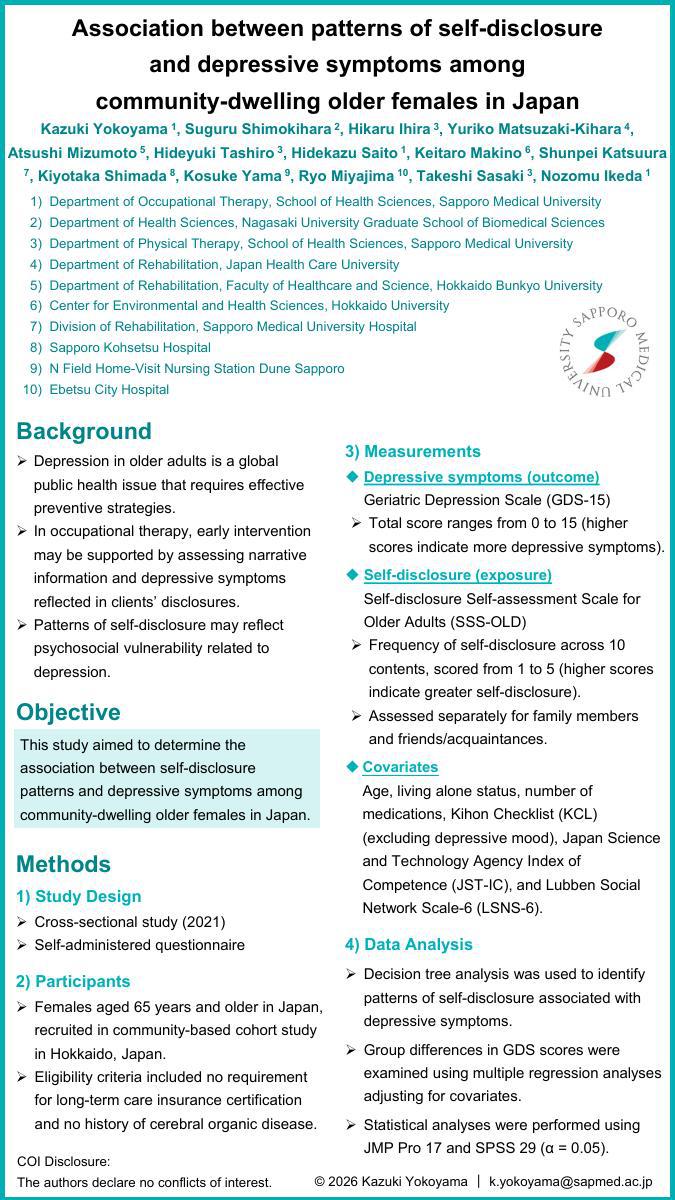
Introduction / Rationale: Depression in old age is a global issue that requires urgent prevention. Early intervention in occupational therapy is possible by assessing narrative information and predicting clients’ depressive symptoms from disclosed information.
Objectives: This study aimed to determine the association between self-disclosure patterns and depressive symptoms among community-dwelling older females in Japan.
Methods / Approach: In total, 209 females aged 65 and above in Japan completed a mailed self-administered questionnaire in 2021. Depressive symptoms were assessed using the Geriatric Depression Scale (GDS). Self-disclosure to “family members” and “friends/acquaintances” were assessed using the Self-disclosure Self-assessment Scale for Older Adults, which measures ten contents of self-disclosure. This study was approved by the Sapporo Medical University Ethical Review Board (approval number 28-2-7).
Results / Practice Implications: Decision tree analysis identified four groups, each indicating a pattern of self-disclosure associated with depressive symptoms. Low self-disclosure about “motivation and strengths in life” and “experiences of work and social activities” were associated with the highest mean GDS score for self-disclosure to family members. Low self-disclosure about “future outlook” and experience of self-disclosure about “concern about cognitive function” were associated with the highest mean GDS score for self-disclosure to friends/acquaintances. Multiple regression analysis showed a more significant association between depression and self-disclosure to family members and friends/acquaintances compared to the self-disclosure pattern of the lowest depression, even after adjustment for covariates.
Conclusion / Contribution to the occupational therapy profession: This study revealed patterns of self-disclosure with high depressive symptoms. Recognizing these features may contribute to the early intervention for depressive symptoms in older females in occupational therapy.
