
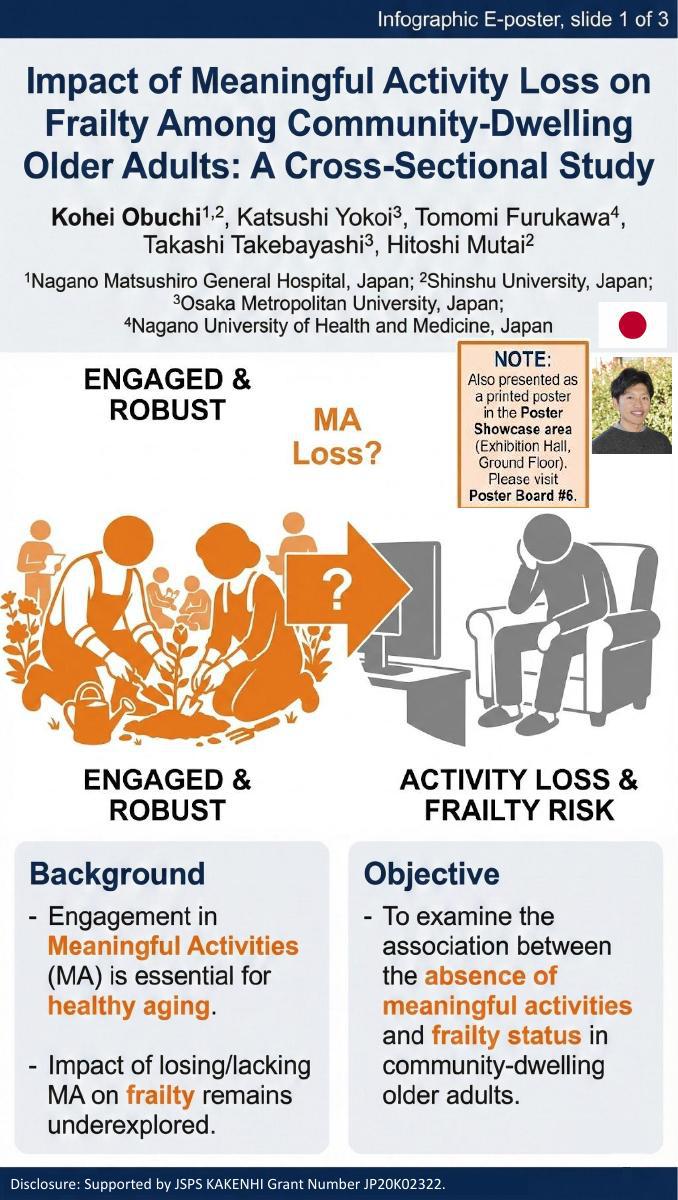
Introduction: Engaging in meaningful activities is essential for maintaining health and well-being in older adults. However, the impact of losing meaningful activities on frailty remains underexplored. This study examines the association between the absence of meaningful activities and frailty status in community-dwelling older adults.
Methods: A cross-sectional survey was conducted with 1,018 older adults residing in a rural area of Japan. Participants were classified into two groups: those who engaged in meaningful activities and those who did not. Frailty status was assessed using the Kihon Checklist. Multinomial logistic regression analysis was performed to evaluate the association between meaningful activity loss and frailty.
Results: Older adults without meaningful activities had significantly higher odds of being frail (odds ratio: 2.21, p < 0.01) compared to those engaged in meaningful activities. Among late-stage older adults, transitioning from engagement in meaningful activities to inactivity was associated with an increased risk of frailty. Residual analysis further indicated that engagement in work and leisure activities was associated with a lower likelihood of frailty.
Discussion: These findings suggest that the loss of meaningful activities may serve as an early indicator of frailty risk. Maintaining engagement in meaningful activities over time may be a key strategy for frailty prevention and healthy aging. Occupational therapy interventions should focus on identifying and sustaining meaningful activities that align with individual abilities and preferences.