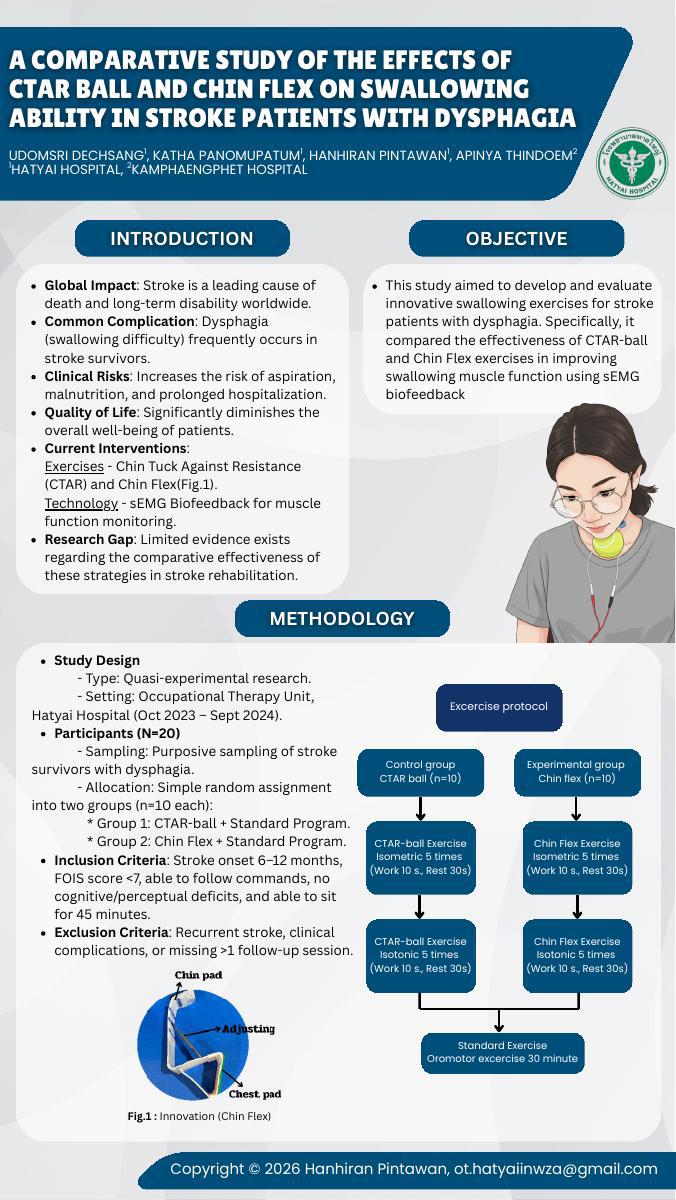
Introduction :Dysphagia in stroke patients leads to severe complications such as aspiration pneumonia. Strengthening the suprahyoid muscles can help elevate the larynx during swallowing. Studies have shown that CTAR exercises improve laryngeal elevation and tongue pressure, resulting in effective swallowing, but they are not suitable for patients with tracheostomy. Chin flex was an adjustable device made from recycled thermoplastic, adapted for use in patients with such limitations.
Objectives: This study compares the effectiveness of the Chin Flex device and CTAR ball on the function of the suprahyoid muscles
Methods : The research was a quasi-experimental, control group posttest only. The sample consisted of 20 stroke patients with dysphagia in the acute phase, randomly divided into two groups. The first group used Chin Flex for 15 minutes, and the second group used CTAR ball for 15 minutes. Both groups underwent standard swallowing training for 30 minutes. Measure the function of the suprahyoid muscles using surface electromyography (sEMG) and assess user satisfaction levels.
Results: It was found that both groups had significantly different average sEMG and satisfaction levels (p < 0.05). The group using the Chin Flex device had higher average suprahyoid muscle activity and satisfaction levels than the CTAR ball group.
Conclusion: Chin Flex improves the function of the suprahyoid muscles and has a higher satisfaction level in terms of ease of use. It can be used as an alternative to help manage the suprahyoid muscles.
