
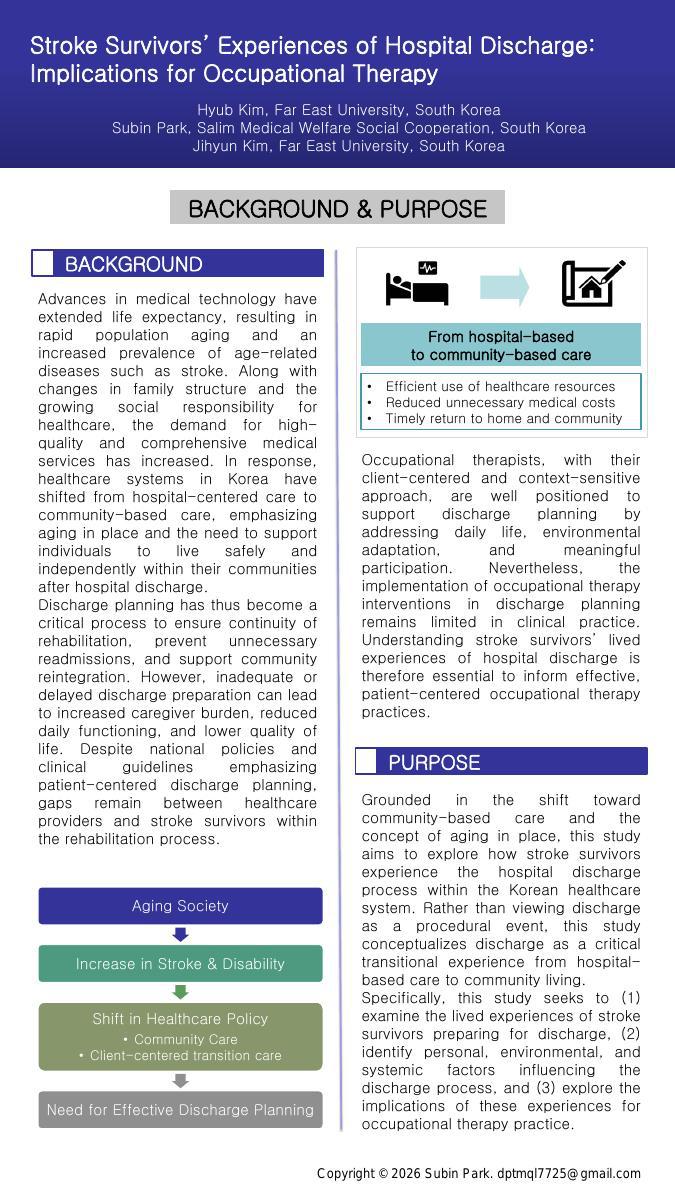
Introduction: The transition from hospital to home is a critical phase for stroke survivors, yet the discharge process within the Korean healthcare system remains underexplored. Many face challenges in regaining autonomy, accessing essential information, and reintegrating into daily life. This study examines their experiences to identify key barriers and highlight the role of occupational therapists in supporting a smoother transition.
Objectives: This study aims to (1) explore the lived experiences of stroke survivors preparing for discharge, (2) examine barriers and facilitators in the healthcare system, and (3) propose occupational therapy strategies to improve post-discharge adaptation and meaningful occupational engagement.
Methods: A phenomenological approach (Giorgi’s method) was used to analyze the experiences of five stroke survivors preparing for discharge from a rehabilitation hospital. Data were collected through three to five in-depth interviews per participant, lasting approximately 60 minutes, conducted one week before discharge between August and October 2022. Interviews explored participants’ thoughts and personal experiences on discharge preparation and decision-making, continuing until data saturation.
Results: Six key themes emerged: (1) Relief from hospitalization, (2) Fear of the future, (3) Limited access to information, (4) Struggles to regain independence, (5) Personal reflection and growth, and (6) Hope for the future.
Conclusion: Stroke survivors strive to regain autonomy and reintegrate into daily life, yet inadequate discharge preparation presents challenges. Findings highlight the need for occupational therapists to provide personalized discharge planning, interdisciplinary collaboration, and community-based support to enhance post-hospital adaptation and long-term well-being.