
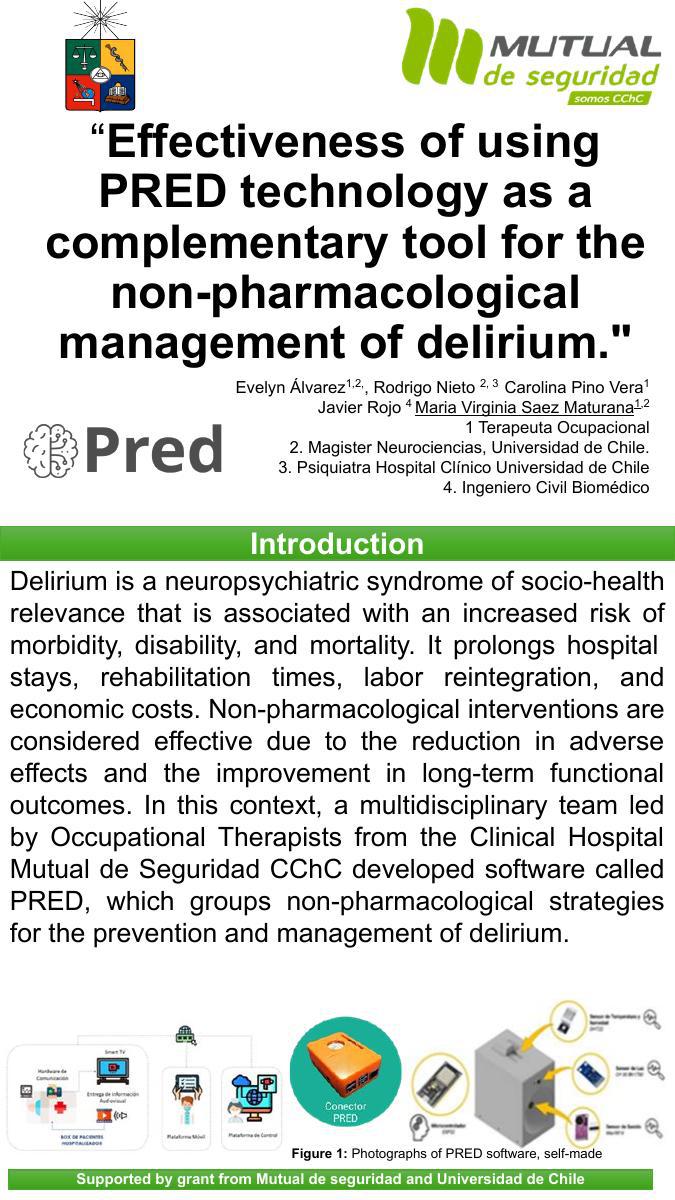
Introduction/ Rationale: Delirium is a neuropsychiatric syndrome of socio-health relevance that is associated with an increased risk of morbidity, disability, and mortality. It prolongs hospital stays, rehabilitation times, labor reintegration, and economic costs. Non-pharmacological interventions are considered effective due to the reduction in adverse effects and the improvement in long-term functional outcomes. In this context, a multidisciplinary team led by Occupational Therapists from the Clinical Hospital Mutual de Seguridad CChC developed software called PRED, which groups non-pharmacological strategies for the prevention and management of delirium.
Objective: Evaluate the effectiveness of using the PRED software as a complementary tool in the management and prevention of delirium.
Methods / Approach: A non-randomized clinical trial with two parallel branches, including 15 patients with Delirium from H.C.M.S, who receive a conventional non-pharmacological intervention protocol. Half of this group also receives the protocol for using the PRED software for 14 days.
Results / Implications for practice: The use of PRED technology is associated with a reduction in the number of days of delirium, hospital stay, and adverse events. It also incorporates value in humanized and personalized treatment, giving the family an active role in the rehabilitation process.
Conclusion / Contribution to the profession of occupational therapy: The implementation of PRED reinforces the importance of interdisciplinary work in hospital settings, positioning occupational therapists as leaders in the incorporation of innovative strategies that combine technology with a therapeutic approach focused on the functionality and well-being of the patient and their environment.