
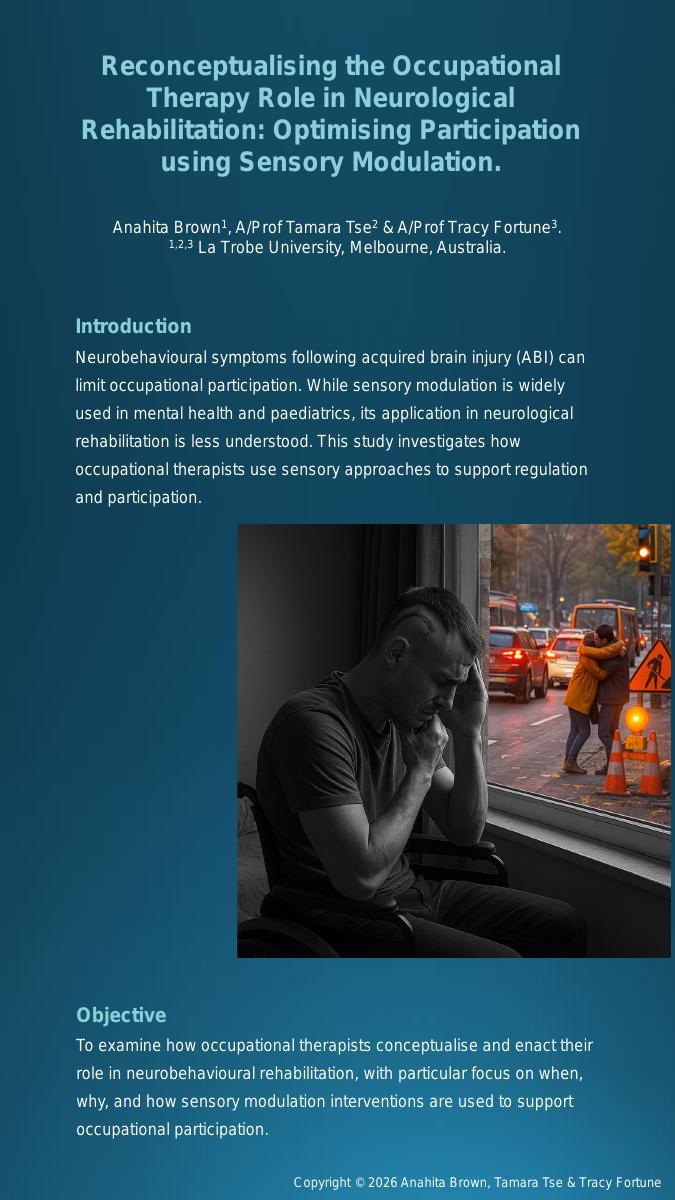
Introduction: Sensory modulation interventions are widely used in mental health and paediatric settings. Emerging evidence indicates occupational therapists are adopting these interventions in neurological rehabilitation to improve occupational participation for individuals experiencing neurobehavioural sequela.
Objectives: This study provides insight into occupational therapists' perspective of their role in neurobehavioural rehabilitation, specifically, if, when, why and how they incorporate sensory modulation interventions.
Methods: A mixed-methods approach including a national survey, concept analysis, scoping review, and bounded case study was used to address the research objectives.
Results: The survey (n=97) revealed that 90% (n=87) of occupational therapists working across a range of neurological settings in Australia perceived that their role included assessment of neurobehavioural sequela and that 82% of them use sensory modulation interventions to optimise occupational participation. Case study participants described task and environmental adaptations, education, and consultative collaboration with neuropsychology as key areas of professional expertise.
Conclusion: These findings, which highlight the innovative use of sensory modulation and other interventions, act as a call-to-action for occupational therapists to explicitly reclaim their role in the neurological rehabilitation field. Policy and practice guideline review and interdisciplinary collaboration will further cement occupational therapists as key advocates for a unique role in this complex area of practice.