
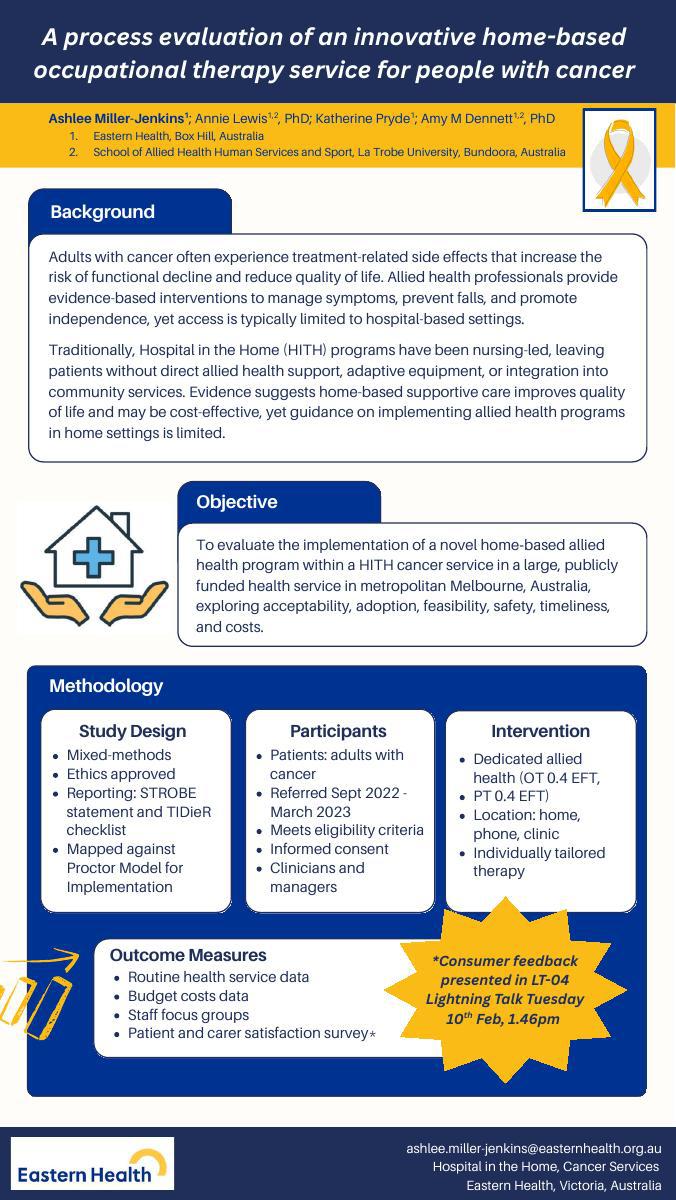
Introduction: Adults with cancer experience a variety of illness and treatment related side effects that put them at risk of functional decline. Patients undergoing community-based treatment for cancer in publicly funded health services across Australia have traditionally not had direct access to occupational therapy services.
Objectives: The aim of this study was to perform a process evaluation of the acceptability, adoption, feasibility, costs, safety and timeliness of a new allied health program in Hospital in the Home (HITH) Cancer Services.
Methods: A mixed methods process evaluation was completed for HITH patients with a cancer diagnosis referred to allied health between September 2022 and March 2023. Routinely collected data (demographics, service provision) were analysed to understand previously unmet demand, occupational therapy service indicators and therapy provided to inform feasibility, acceptability and opportunities to improve the program.
Results: Occupational therapy accepted 44 referrals of which 59% were for home safety assessment and/or functional independence changes. Median wait time from referral to first contact was 5 days. Common interventions included falls prevention strategies (52%), equipment prescription (48%) and energy conservation techniques (41%). Other interventions included home modifications, pressure care advice and upper limb therapy. 59% of patients were referred to community services for ongoing support.
Conclusion: This study demonstrates demand for occupational therapy services for people undergoing cancer treatment at home. Potential health savings could be attributed to occupational therapy interventions addressing modifiable risks, such as falls and pressure injuries, facilitating referrals to community services and preventing unnecessary hospital admissions. This innovative allied health program could be used to inspire change in other local and international service delivery models.