
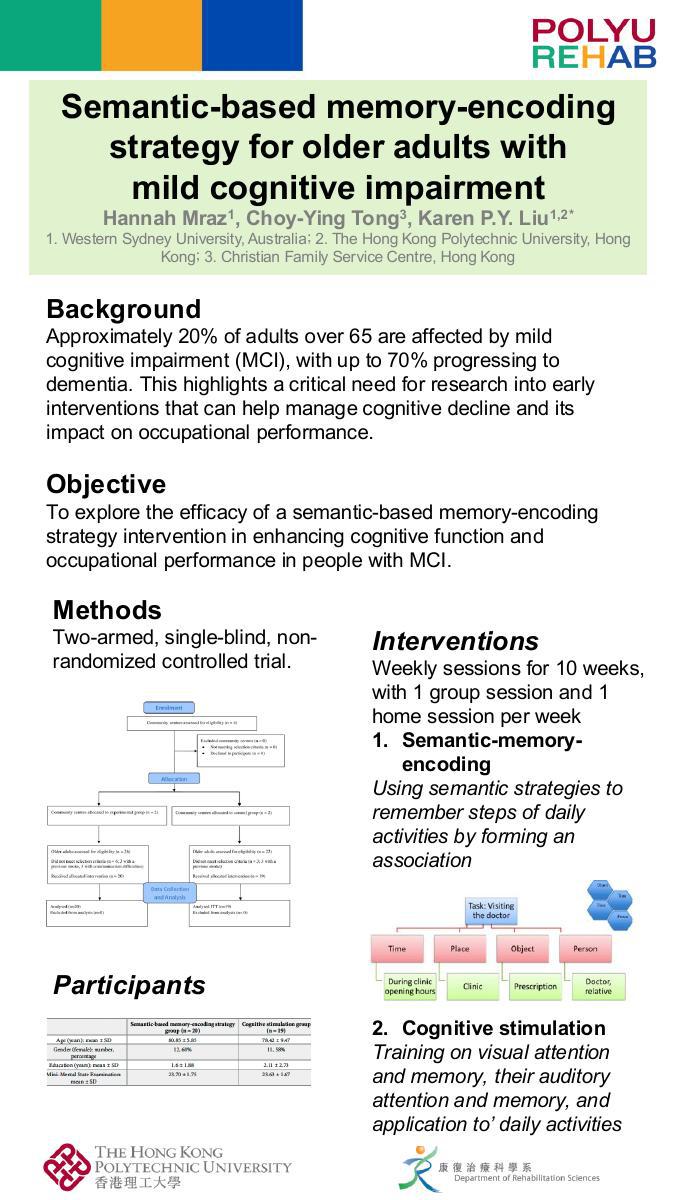
Introduction: Approximately 20% of adults over 65 are affected by mild cognitive impairment (MCI), with up to 70% progressing to dementia. This highlights a critical need for research into early interventions that can help manage cognitive decline and its impact on occupational performance.
Objective: The objective was to explore the efficacy of a semantic-based memory-encoding strategy intervention in enhancing cognitive function and occupational performance in people with MCI.
Methods: We conducted a two-arm, single-blind, non-randomized controlled trial with 39 participants assigned to either the semantic-based memory-encoding group or the cognitive stimulation group. Each group attended one session at a community center and one home-based session weekly for 10 weeks. Outcome measures, including occupational performance, memory, and general cognition, were evaluated before and after the intervention.
Results: No statistically significant differences were observed in demographic data or clinical baseline measures between the two groups. The semantic-based memory-encoding strategy group exhibited significant improvements in memory (p=.001-.033), general cognition (p=.001-.039), and occupational performance (p=.005). In contrast, the cognitive stimulation group showed significant enhancements in cognition (p=.029) and occupational performance (p=.029-.030). Between-group analysis revealed statistically significant differences in favour of the semantic-based memory-encoding strategy group, with improvements in memory (p=.001) and general cognition (p=.001).
Conclusion: The findings indicate that the semantic-based memory encoding strategy is effective for enhancing memory and cognitive abilities, which may help sustain occupational performance in individuals with MCI, supporting healthier aging in older adults.
Reference
- Mraz, H., Tong, C. Y., & Liu, K. P. Y. (2023). PloS one. 2023;18(3):e0283449