
Introduction/ Rationale:
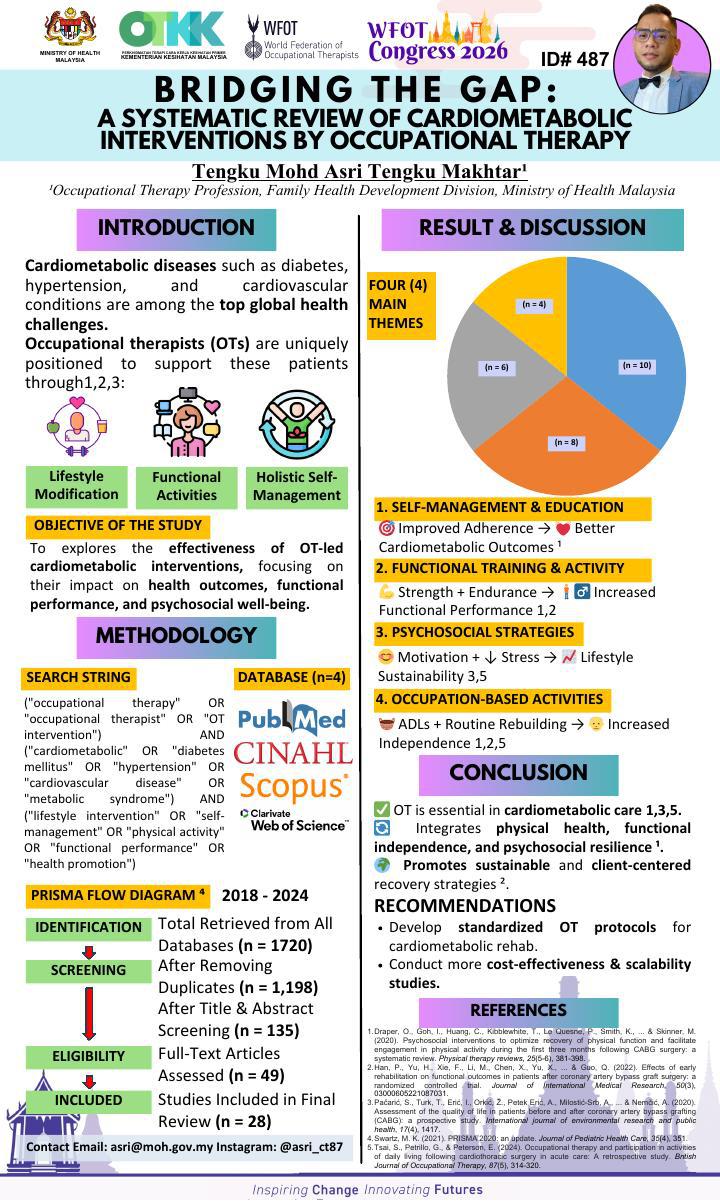
Cardiometabolic diseases, including diabetes, hypertension, and cardiovascular conditions, are leading causes of morbidity and mortality globally. Occupational therapy (OT) plays a crucial role in supporting individuals with these conditions by promoting functional independence, lifestyle modifications, and psychosocial well-being. This systematic review evaluates the effectiveness of OT-led interventions in improving health outcomes, functional performance, and quality of life.
Objectives:
This review aims to assess the impact of OT interventions on cardiometabolic management, focusing on health-related biomarkers, functional capacity, and psychosocial adaptation.
Methods/ Approach:
A systematic review was conducted following PRISMA guidelines. Peer-reviewed articles published between 2018 and 2024 were retrieved from PubMed, CINAHL, Scopus, and Web of Science. Studies were included if they examined OT-specific interventions targeting cardiometabolic conditions, such as occupation-based rehabilitation, physical activity facilitation, self-management training, or lifestyle modification programs. Data extraction focused on intervention strategies, health outcomes (e.g., glycemic control, blood pressure, BMI), and functional and psychosocial improvements.
Results/ Practice Implications:
A total of 28 studies met the inclusion criteria. OT interventions commonly involved activity-based lifestyle modifications, energy conservation techniques, ergonomic adjustments, and patient education. Significant improvements were observed in glycaemic control (average HbA1c reduction of 0.8%), blood pressure, and BMI. Enhanced occupational performance and psychosocial well-being were also reported, supporting greater adherence to lifestyle changes.
Conclusion/ Contribution to the OT Profession:
This review highlights the role of OT in cardiometabolic care, emphasizing its holistic and client-centred approach. Further research is needed to develop standardized intervention protocols and assess their cost-effectiveness in diverse healthcare settings.