
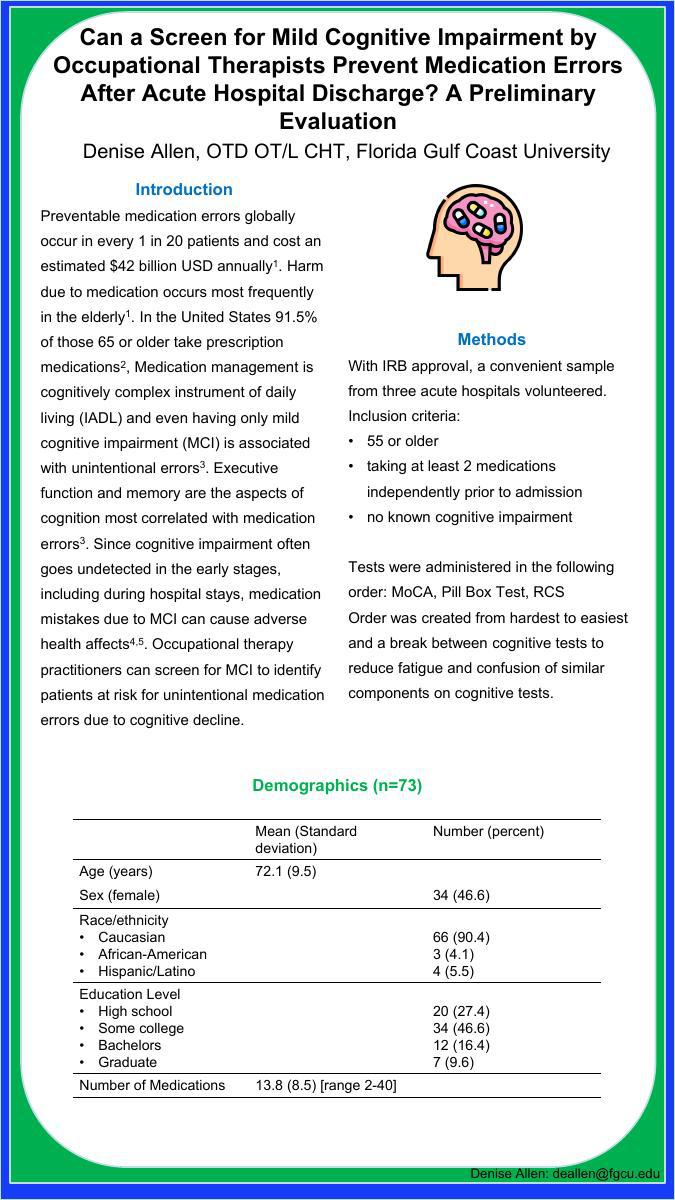
Introduction: The World Health Organization estimates that over 50% of people worldwide make medication errors. Many unintentional errors are correlated with mild cognitive impairment and can lead to many adverse effects. Use of orientation questions to screen cognition is not sufficient to detect mild cognitive impairment and identify those who may have difficulty with instrumental activities of daily living that require higher level cognitive skills such as managing medications. Occupational therapy practitioners can play an important role in identifying and helping those who have difficulty with medication management.
Objectives: To determine if a quick screen could be utilized to identify patients that may have mild cognitive impairment and make unintentional errors with medication that could cause adverse effects.
Methods: With internal review committee approval, patients in acute care with no known cognitive impairment that manage their own medications at home and were over 65 were recruited. The Montreal Cognitive Assessment, Pillbox Test, and the Rapid Cognitive Screen were administered to assess correlation of the screen with an established test for mild cognitive impairment and a functional medication sorting task.
Results: Preliminary results indicate a significant correlation between the screen and cognitive assessment and a moderate correlation between both cognitive tests and the Pillbox Test.
Conclusion: Completing quick screens of patients with risk factors to identify mild cognitive impairment can indicate those needing further assessment. Identification of problems may influence interventions or discharge planning to prevent adverse events and improve overall quality of life.