
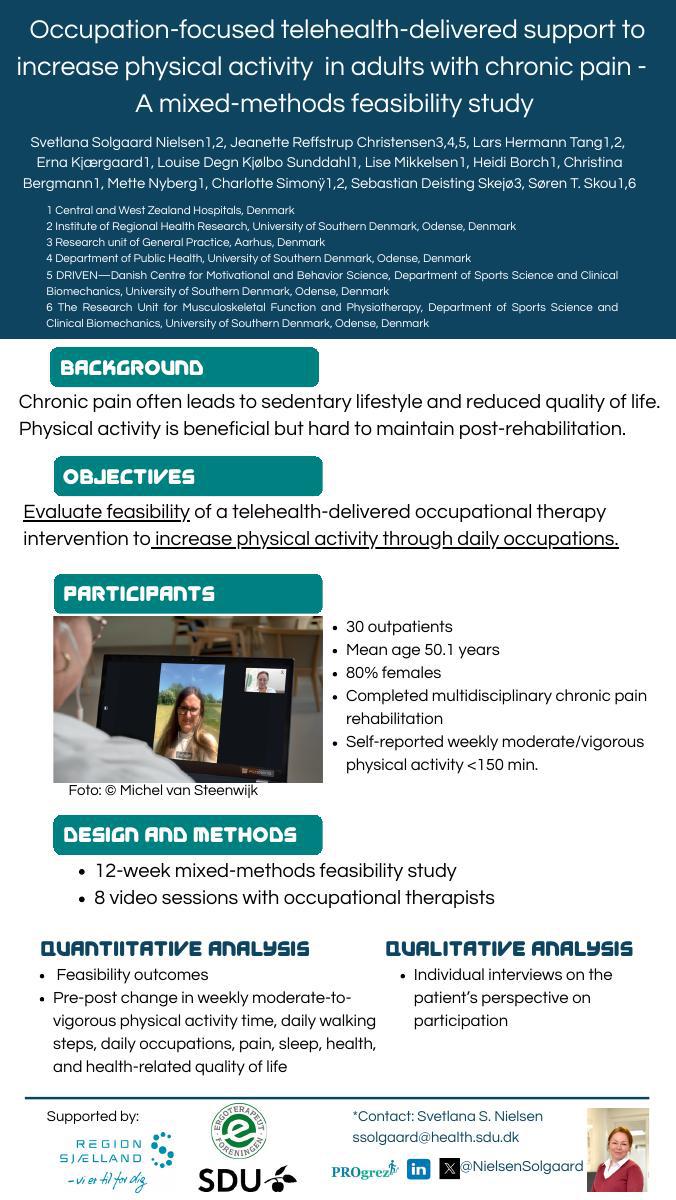
Introduction: Chronic pain populations need help implementing regular physical activity.
Objectives: To evaluate the feasibility of occupation-focused telehealth-delivered support to everyday physical activity in adults with chronic pain.
Methods: In this 12-week one-group mixed-methods feasibility study, occupational therapists delivered 1-hour video appointments to thirty sedentary adults with chronic pain. We evaluated: a) feasibility outcomes, b) pre-post change in accelerometer-assessed physical activity and self-reported occupational performance and satisfaction, occupational balance, pain, sleep, and health-related quality of life, and c) treatment satisfaction. Qualitative interviews of twelve completers and three dropouts revealed user perspectives on participation.
Results: Completers (n=22; 82% females) met the feasibility criteria for retention (77%); program adherence (95%); patients’ self-perceived relevance, timing, and mode of delivery (92%); assessment procedure acceptance (92%); adverse events (none); and fidelity of the delivery (92%). The average monthly recruitment rate was lower than the planned (2 instead of 3 participants/ month). No pre-post difference in physical activity time or number of daily steps was observed. Occupational performance (1.52; 95% CI 0.66; 2.38) and satisfaction (1.95; 95% CI 1.36; 3.17) improved significantly. Treatment satisfaction was high. User perspectives on intervention participation revealed themes: “Small health behavior changes but a big difference in everyday life”, “Social interactions are challenging yet vital”, and “Maintaining a good quality of life requires more than merely illness acceptance”.
Conclusion: Occupation-focused telehealth-delivered physical activity support was feasible, satisfactory, and beneficial for occupational performance and satisfaction but had no significant impact on physical activity. The recruitment strategy must be improved in future research.