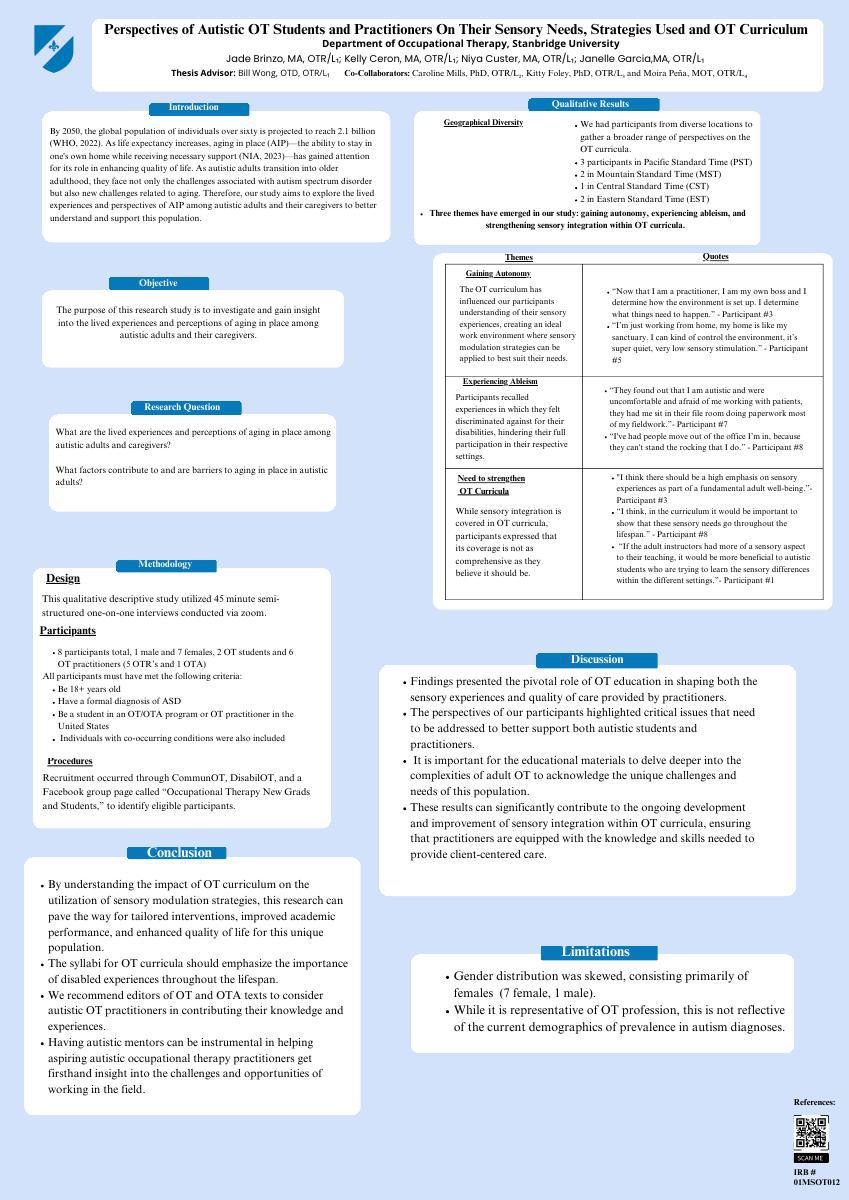
Rationale: As autistic individuals age, their sensory preferences and modulation strategies may change over time. Meanwhile, there are more neurodivergent adults studying occupational therapy (OT) globally.
Objectives: Audience will describe the impact of OT curriculum on autistic OT students and practitioners' sensory modulation strategies; Audience will advocate for meaningful changes to OT curriculum on educating future OT practitioners in neurodivergent-affirming sensory modulation strategies.
Methods: A phenomenological research approached is used. This study meets criteria of participatory action research because the lead author is autistic. Eight OT autistic OT students and practitioners from the United States were recruited for this study via online social media forums for OT students and practitioner and word of mouth. The student researchers performed semi-structured interview with each participant via Zoom. After the interviews were completed, the student researchers transcribed the text of each interview before meeting with the lead author to code and identify common themes from the interviews.
Practice Implications: Three themes emerged from the interviews- increased autonomy once they become licensed practitioners, personal experiences with ableism, and the need to strengthen education of sensory integration within OT curricula. The findings imply that while the participants can utilize the knowledge they gained from their OT education and training to refine their sensory modulation strategies, there is room for improvement on OT curricula in the education of neurodivergent-affirming sensory modulation strategies.
Conclusion: This study suggested the importance of inclusion of neurodivergent OT practitioners in developing educational materials on sensory modulation strategies for future OT practitioners.
