
Introduction/Purpose
Impaired self-awareness is a common feature of higher brain dysfunction following stroke. Addressing impaired awareness and low self-esteem is crucial in rehabilitation; however, research on the development of self-awareness from stroke onset remains limited. This study applied the Trajectory Equifinality Model (TEM) to explore how acute stroke patients experience self-awareness from admission to discharge.
Methods
Participants were stroke patients with higher brain dysfunction who provided informed consent. Three participants (mean age: 73) were included: two with right cerebral infarction and one with left cerebral hemorrhage. They exhibited impairments in attention, left spatial perception, and insight. Weekly interviews were conducted during hospitalization using a structured interview guide, and transcripts were analyzed verbatim. TEM analysis was used to track changes in self-awareness over time. Quantitative assessments of self-awareness were performed at both admission and discharge. Ethical approval was obtained from the Yokohama General Hospital Ethics Review Committee.
Results
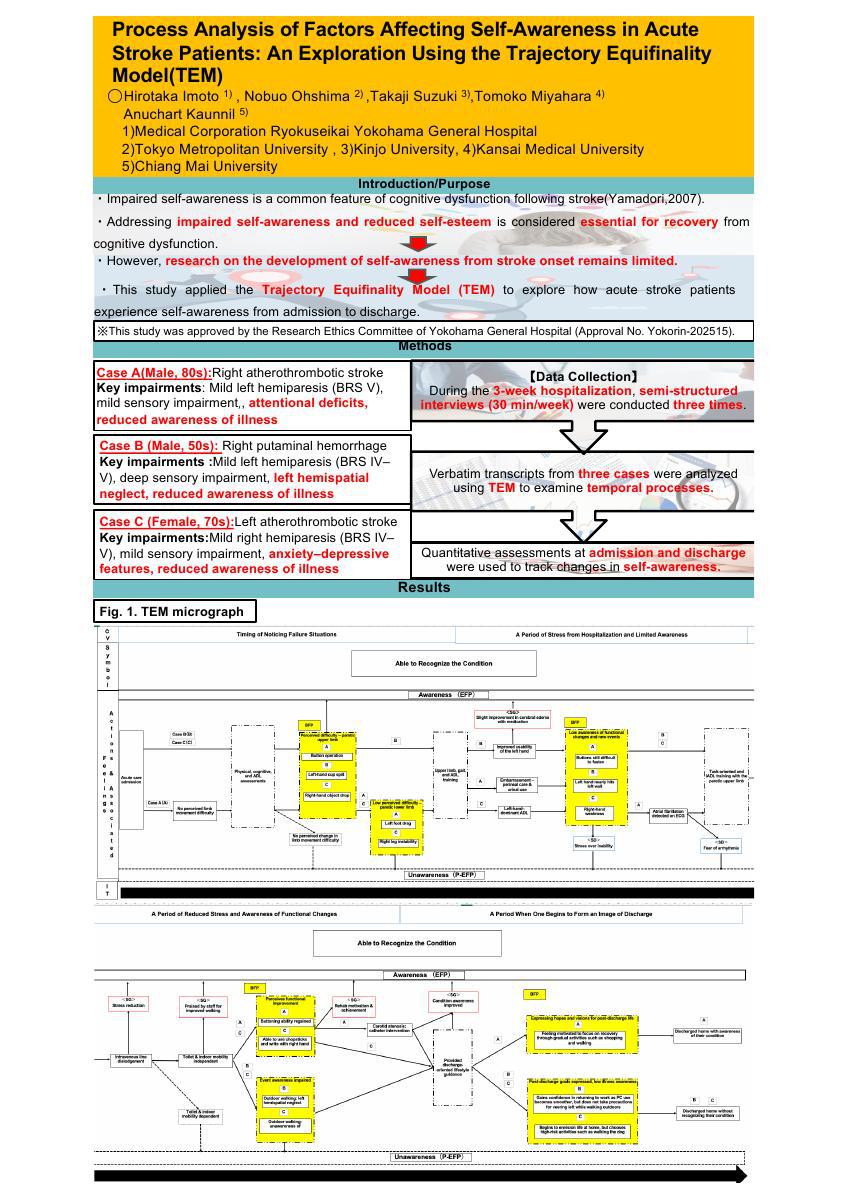
TEM analysis revealed changes in self-awareness, identifying key rehabilitation points (OPPs) and bifurcation points (BFPs) that indicated shifts in awareness. Equifinal points (EFPs) and polarized equifinal points (P-EFPs) were classified based on the presence or absence of awareness at discharge. The participant with greater self-awareness demonstrated more significant cognitive improvements, whereas the others primarily showed physical recovery without substantial cognitive change.
Conclusion
Self-awareness can improve during rehabilitation; however, effective intervention strategies remain limited when awareness does not develop. The presence of self-awareness significantly influences cognitive recovery, highlighting the need for targeted interventions to enhance self-awareness in stroke rehabilitation.